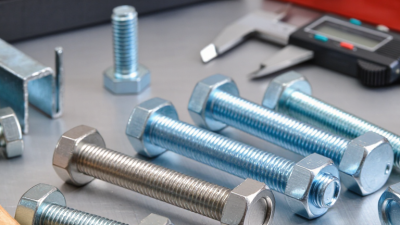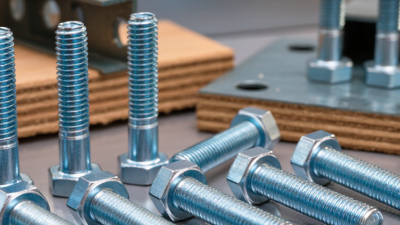
Choosing a China supplier for a Mushroom Head Carriage Bolt involves more than comparing unit prices. The fastener must fit the joint, installation method, and service environment. Its rounded head offers a smooth exposed profile, while the square neck helps resist rotation when tightened. Small details matter: thread diameter, bolt length, neck dimensions, material grade, and coating can affect fit and performance.
The market context is substantial. Grand View Research estimated the global industrial fasteners market at USD 90.2 billion in 2023 and forecast continued growth through 2030. That figure signals broad demand, not proof that any individual supplier is qualified. Buyers should request dimensioned drawings, material and coating specifications, inspection records, and traceable test documentation. Where applicable, confirm whether products are manufactured to the relevant requirements of ASME B18.5 or another agreed specification. Then compare samples against the actual mating parts. A neat catalog is not enough.
There is room for honest doubt. A supplier’s website cannot show how consistently a production line controls tolerances or finishes. Ask how inspections are recorded, how nonconforming parts are handled, and whether sample results match batch documentation. Clear answers, verifiable records, and repeatable quality provide a stronger basis for choosing a Chinese supplier than a low quotation alone.
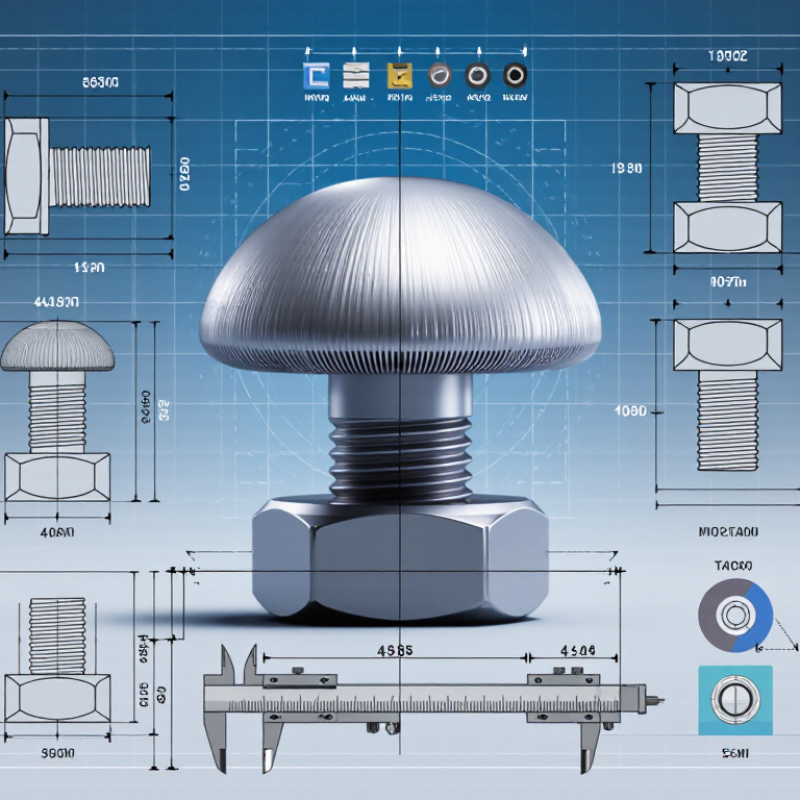
A mushroom head carriage bolt has a broad, rounded head with a smooth, low-profile top. Beneath it sits a square neck, followed by a threaded shank. When tightened, the neck can grip a matching square opening or press into timber, helping prevent the bolt from turning. No slot needed. A nut secures the opposite end, so the visible side stays neat and snag-free.
These bolts are commonly used to fasten wooden gates, benches, outdoor furniture, and timber panels. The rounded head works well where clothing, hands, or equipment might catch on a projecting screw head. That detail matters. For installation, drill a suitable pilot hole and check that the square neck seats firmly; soft or split wood may not hold it securely. Choose bolt length based on the material thickness and nut engagement, and consider corrosion-resistant material for damp or exposed settings. A carriage bolt is not automatically suitable for every load-bearing joint. Check the design, substrate, and specified hardware before relying on it. Even a well-fitted bolt can loosen if the wood compresses over time, so inspection may be needed.
China Best Mushroom Head Carriage Bolt Supplier?
How Mushroom Head Carriage Bolts Are Made in China
Making a mushroom head carriage bolt begins with steel wire rod. The wire is drawn to the required diameter, cut into blanks, and shaped under pressure. Cold heading forms the rounded head and the square neck beneath it. Larger or specialized fasteners may require a different forming route. That choice affects consistency, cost, and surface finish.
Small details matter. The square neck must seat cleanly in the mating hole, or the bolt may spin during installation. Threads are commonly rolled rather than cut, helping preserve material flow at the thread root. Heat treatment may follow when the specified strength class requires it. Finishing can include cleaning and a protective coating, followed by checks for dimensions, thread fit, hardness, and appearance. A bright surface alone proves little.
China’s scale gives useful manufacturing context: the World Steel Association’s World Steel in Figures 2025 reports approximately 1,005 million tonnes of crude steel production in China in 2024. That figure describes steel output, not carriage-bolt quality. Buyers should still request material and inspection records, and confirm the applicable requirements, such as ISO 898-1 for mechanical properties of carbon and alloy steel fasteners. A factory can produce a convincing sample, yet batch consistency deserves separate attention.
When sourcing mushroom head carriage bolts, check the specification before comparing prices. The standard should define dimensions, thread size, head shape, material, and mechanical properties. A smooth, domed head is not proof of consistent quality. Measure sample bolts with calipers, and check that the square neck fits the mating hole without excessive force.
For carbon steel bolts, confirm the stated property class and applicable product standard match the drawing and intended load. ISO 898-1 covers mechanical properties for certain carbon and alloy steel fasteners, but it may not cover every carriage-bolt design. Ask for material test reports and inspection records tied to the actual production lot. Small details matter. Verify thread fit, head diameter, and shank length across several samples, not just one.
Coating quality also deserves attention. Request the coating type, thickness requirements, and relevant test results. Salt-spray results can help compare corrosion resistance, but they do not predict every outdoor condition. That is not enough. Review the supplier’s quality procedures, including calibration records and how defects are handled; an ISO 9001 certificate describes a management system, not a guarantee that each bolt is flawless. I would still request a pre-shipment inspection for critical orders. It adds time and cost, but catches dimensional issues before installation.
Assess a Chinese carriage bolt supplier through evidence, not polished claims. Ask for a dimensional drawing that specifies head diameter, square-neck size, thread, length, and material. Compare it with a physical sample using calipers and a thread gauge. Small details matter. A square neck that does not seat properly can turn installation into a frustrating job.
Request material and coating information, plus inspection records for the production batch. Check whether the supplier can explain how it controls thread fit, surface finish, and head shape. A smooth-looking sample is useful, but it does not prove every shipment will match. Ask how often samples are checked and what happens when a measurement falls outside the agreed range.
Communication is another practical test. Send a clear drawing and ask the supplier to confirm each key dimension in writing. Notice whether answers are specific or simply reassuring. Before placing a large order, test a small batch in the intended assembly and inspect several pieces, not just one. I would still leave room for uncertainty: a careful checklist reduces risk, but cannot replace checking the actual parts. Packaging also deserves attention; loose bolts can arrive scratched or mixed by size.
A reliable supplier should understand how mushroom head carriage bolts fit the job, not just quote a low price. Check the head diameter, bolt length, thread size, and square neck dimensions against your drawings. The square neck should engage properly with the material and help resist turning during installation. Small details matter. Ask whether the supplier can provide clear specifications and inspection records for each production lot.
Material and surface finish need equal attention. Match them to the working environment, such as indoor wood assembly or equipment exposed to moisture. Request a sample and check thread fit, finish consistency, and visible defects before approving a larger order. Ask how the supplier controls dimensions and handles rejected parts. A polished sample is useful, but it does not prove every batch will match. That gap is easy to overlook. Clarify production lead time, packaging, and how changes to an order are communicated. A careful supplier gives direct answers and supports them with evidence, rather than making broad promises.