How to Choose Hot Sale Carriage Bolts in 2026?
Choosing a Hot Sale Carriage Bolt in 2026 takes more than comparing prices or picking the shiniest finish. A bolt may look suitable in a product photo, yet fail to match the wood thickness, hole size, or outdoor conditions at the job site. Small details matter. Buyers should check diameter, length, material, coating, thread coverage, and head dimensions against the actual application. For example, a carriage bolt securing a garden bench faces different moisture and load conditions from one used in an indoor workbench.
A useful perspective comes from Daniel Mercer, a fictional composite fastener specialist created for this introduction: “Choose the bolt for the joint, not just the listing.” The line is simple, but worth remembering. Hot-sale labels can signal strong demand, not verified suitability for every project. Ask suppliers for clear product specifications, consistent dimensions, material information, and inspection details. When a listing leaves these points unclear, pause and request clarification. That extra step may feel slow. It can prevent a poor fit.
This guide will explain how to compare popular carriage bolts without treating price as the only measure. It will cover common sizes, finishes, purchase checks, and questions to ask before placing a bulk order. Exact requirements vary by design and environment, so recommendations should be checked against the project’s drawings and qualified technical advice. No single bolt suits every connection. That is an easy point to overlook when a product is marked “hot sale.”
Understand Carriage Bolt Design, Uses, and Key Features
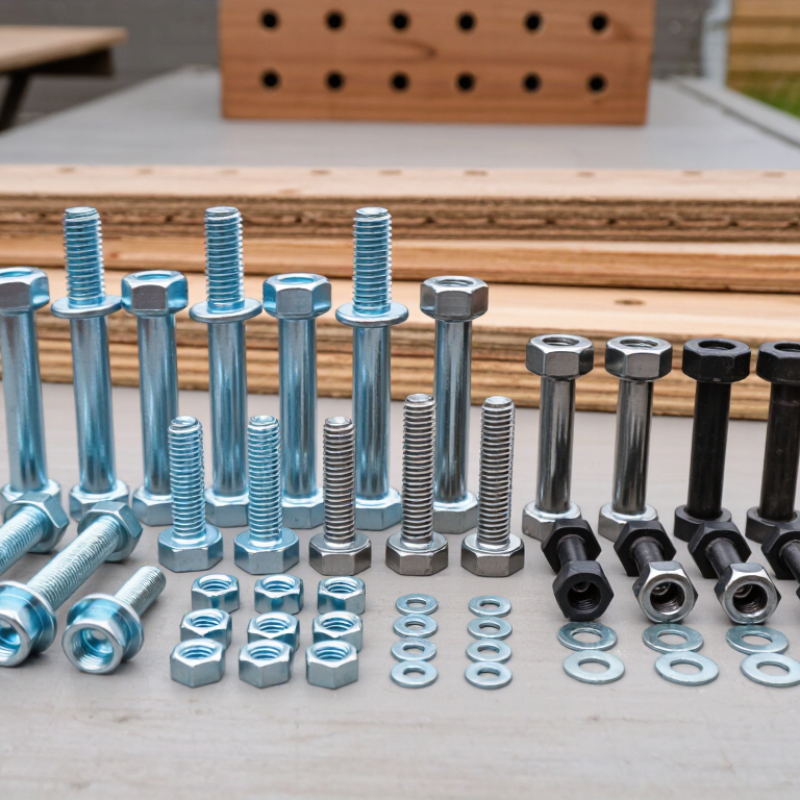
A carriage bolt has a smooth, domed head and a square neck beneath it. The neck bites into wood, helping prevent the bolt from spinning as a nut is tightened. This makes the design useful for timber-to-metal joints, outdoor benches, trailers, and equipment frames. Picture a bolt passing through a wooden rail: the head sits flush against the visible face, while the square neck grips the timber. That grip depends on a correctly sized hole and sound material.
Check the application before choosing a hot-sale option. ASTM International’s ASTM A307 specification sets a minimum tensile strength of 60 ksi, about 414 MPa, for Grade A bolts within its scope. That figure is a useful reference, not proof that every carriage bolt meets A307. Confirm the grade and material on the product documentation. ASME B18.5 covers carriage-bolt dimensions, including head and neck geometry. A close fit matters. An oversized hole can let the neck rotate or loosen the joint; soft or split wood can do the same. Check length against the full stack of materials, washer, and nut. Corrosion protection also deserves attention outdoors, though coatings can wear at contact points. That detail is easy to miss.
Define Application, Load, and Environmental Requirements
How to Choose Hot Sale Carriage Bolts in 2026?
Define the application before comparing popular sizes or finishes. A carriage bolt’s rounded head gives a smooth exposed surface, while its square neck helps resist turning in compatible materials. That feature works best when the neck seats firmly in the hole. Fit matters. For timber framing, measure the combined thickness of the pieces and allow enough thread for the nut to engage. For metal assemblies, check hole diameter and material thickness; a loose fit can let the bolt spin during tightening.
Estimate the loads the joint will actually face. Consider tension, shear, vibration, and repeated movement, not just the weight of the parts. A gate hinge, for example, may experience sudden side loads when the gate swings. Select diameter, length, and strength based on the joint design and reliable product specifications. Do not judge capacity by appearance alone. If loads are uncertain, get a qualified engineer to review the connection.
Match the finish to the environment. Indoor, dry use may need different protection from outdoor exposure, coastal air, or frequent washdowns. Moisture can collect beneath a washer or around the threads, where corrosion is easy to miss. Check material compatibility too, especially when dissimilar metals meet. A coating is not a cure-all. I have seen selections made from catalog photos, and that shortcut can miss thread length or finish details. Check the details. Verify dimensions, grade, and finish before ordering.
Choose the Right Material, Finish, and Corrosion Protection
How to Choose Hot Sale Carriage Bolts in 2026?
Choose the Right Material, Finish, and Corrosion Protection
Start with the environment, not the price tag. For dry indoor assemblies, zinc-plated carbon steel can offer practical protection at a modest cost. In damp locations, hot-dip galvanizing provides a thicker zinc layer, though its rougher finish may affect fit. For coastal exposure or frequent washdowns, consider 316 stainless steel; chloride resistance matters there. No finish is perfect.
AMPP’s 2016 IMPACT study estimated corrosion costs the global economy about $2.5 trillion annually, or 3.4% of global GDP. It also reported that effective corrosion management could save 15–35% of those costs. These figures show why specifying protection early matters. Still, a coating label alone cannot predict service life; moisture, salt, temperature, and maintenance all affect performance.
Check the mating parts, too. Dissimilar metals can accelerate corrosion, while overtightening may damage a bolt’s protective finish. A washer can help distribute load, but it cannot repair a scratched coating. The Federal Highway Administration estimated U.S. corrosion costs at $276 billion annually in its 2001 report, based on 1998 data. For critical outdoor assemblies, verify coating requirements and inspect the head and shank after installation. I would not assume a shiny bolt is a durable one.
How to Choose Carriage Bolts in 2026: Material, Finish & Corrosion Protection
Compare approximate material densities to weigh bolt weight against corrosion needs.
Approximate room-temperature densities: carbon steel 7.85, 304 and 316 stainless steel 8.00, and 6061 aluminum 2.70 g/cm³. Density is not a corrosion-resistance rating: stainless alloys generally provide inherent corrosion resistance, while carbon steel usually needs a suitable protective finish. Select the finish for the exposure conditions, and verify fastener compatibility and specifications before purchase.
Verify Bolt Dimensions, Thread Type, and Standards
Hot-sale carriage bolts can look identical in a listing, yet a few millimeters can change fit. Measure the diameter, length from beneath the head, square-neck width, and neck height. ASME B18.5 specifies inch-series carriage-bolt dimensions; compare its tables with the seller’s drawing, not just a product photo. Check whether the application needs coarse or fine threads, and confirm pitch, thread length, and inch or metric sizing. They are not interchangeable.
Material markings matter too. ISO 898-1:2013 assigns property class 8.8 a nominal tensile-strength designation of 800 MPa. That figure describes mechanical performance, not corrosion resistance. Confirm the requested property class, coating, and test documentation together. One easy-to-miss detail: a thick coating can affect thread fit. I would recheck the finished dimensions, even when the paperwork looks complete.
Tips: Request a dimensional drawing and inspection report. Measure a sample bolt with calipers; use a thread gauge to verify pitch. Match the head and neck to the mating hole, then confirm the applicable standard and edition before ordering. A cheap mismatch is still a mismatch.
Compare Hot-Sale Options, Certifications, and Suppliers
Hot-sale carriage bolts are not interchangeable just because their heads look similar.
Compare diameter, length, square-neck fit, steel grade, and coating against the actual joint. ASME B18.5 covers round-head, square-neck bolts; ISO 898-1 specifies mechanical properties for carbon and alloy steel fasteners. For stainless options, check the applicable ISO 3506 requirements.
Match the finish to the setting: zinc plating suits many dry indoor uses, while wet or coastal exposure calls for careful corrosion review.
Ask for material traceability and lot-specific test records. A certificate alone is not proof that every shipment matches the order. That detail matters.
Supplier screening deserves equal attention.
The ISO Survey 2022 reported 1,265,216 valid ISO 9001 certificates across 194 countries and economies. This scale makes certification a useful quality-system signal, not a product-performance guarantee.
Confirm the certificate’s scope, issuing body, and validity, then compare sample dimensions and coating thickness with the quotation.
Ask how the supplier handles rejected lots and changing production batches. A low price can conceal inconsistent inspection; a polished document can, too. I would still verify the first delivery by measurement, especially square-neck fit and thread condition. Slightly tedious, but sensible.