Why Choose Truss Head Carriage Bolts for Your Project?
Choosing a fastener is a small decision with visible consequences. A Truss Head Carriage Bolt combines a wide, low-profile head with a square neck beneath it. The broad head can spread contact across a larger surface than a narrow-headed bolt, while its smooth top creates a clean, finished appearance. The square neck is designed to help resist rotation when properly seated in a compatible material. That matters during tightening.
In practical projects, these bolts may suit timber assemblies, furniture, equipment panels, and other applications where a prominent bolt head is undesirable. Match the bolt’s diameter and length to the materials being joined, and check the load requirements rather than relying on appearance alone. A washer and compatible nut may also be appropriate, depending on the assembly. Small details count.
There is a catch. A truss head does not make an unsuitable joint strong, and a square neck may not grip reliably in every material or hole. I would check the manufacturer’s specifications and test the fit on a sample piece when the application is unfamiliar. That extra check can prevent a loose joint or damaged surface. The right choice depends on the actual materials, installation method, and service conditions—not just the head shape.
Define Truss Heads and Square Necks for Pull-Through and Rotation Resistance
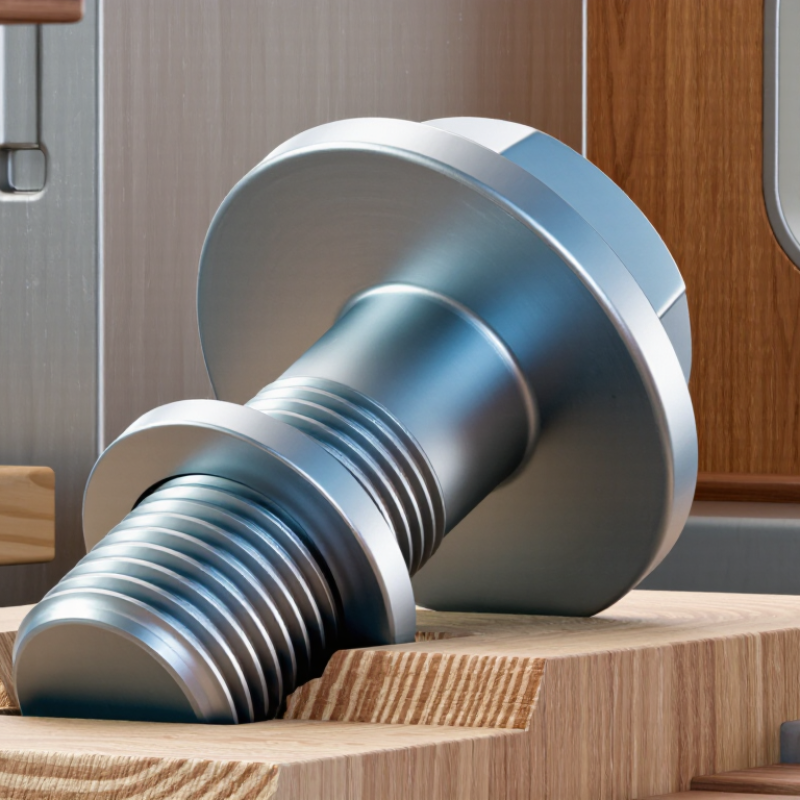
A truss head is a broad, rounded head with a relatively low profile. Its wider bearing surface spreads clamping force over more material than a narrow head. That can help reduce pull-through when fastening sheet metal, wood panels, or light brackets. The head still needs sound support. Thin or soft material may deform under load, so a washer or backing plate can be appropriate.
The square neck sits directly below the head. As the nut is tightened, its corners press into the mating material or a matching square opening. This helps keep the bolt from spinning, which can make one-sided assembly easier. Less turning. The neck’s grip depends on fit and material: an oversized hole, loose timber, or a thin panel may offer little resistance.
For a practical choice, check the panel thickness, hole size, and expected load before selecting a bolt. A snug square neck can resist rotation, but it does not replace proper joint design. Likewise, a broad head helps distribute pressure; it cannot prevent pull-through in every application. I would treat these features as useful safeguards, not guarantees. Small details matter, and installation conditions are easy to underestimate.
Check Carriage-Bolt Dimensions Against ASME B18.5 Requirements
A truss head offers a broad bearing surface, but its profile should not be assumed to match a standard carriage bolt. ASME B18.5-2012 specifies dimensions for round-head square-neck bolts, including head and neck measurements. A truss-head version may need a separate drawing or documented dimensional agreement. Check the specification before ordering. A close visual match is not enough.
Compare nominal diameter, head diameter, head height, square-neck width, and neck length with the applicable ASME B18.5 table. Measure bolt length from the bearing surface beneath the head to the tip; do not include the head. For a 1/2-inch bolt, for example, the diameter alone cannot confirm fit. The neck must seat in the mating hole, while the head must cover the joint without interfering with nearby parts. ASME’s dimensional limits are more useful here than catalog photos. I still double-check the neck measurement on samples; coatings and rounded corners can complicate a quick reading. If the truss profile differs from B18.5, record the actual dimensions on the purchase drawing and verify them on a sample lot. A small mismatch can matter.
Match Strength to ISO 898-1 Class 4.6: 400 MPa Minimum Tensile Strength
Why Choose Truss Head Carriage Bolts for Your Project?
A truss head carriage bolt can suit assemblies where a broad, low-profile head is useful and the square neck helps resist rotation in a matching hole. But head shape alone does not tell you how much load a fastener can carry. Material class matters.
For ISO 898-1 property class 4.6, the minimum tensile strength is 400 MPa. The class also indicates a nominal yield-strength ratio of 0.6, corresponding to 240 MPa. These figures describe the fastener’s mechanical properties, not a safe working load for every installation. Diameter, stress area, thread engagement, joint materials, and loading conditions all affect performance. That matters.
For a real project, match the bolt size and class to the joint design, then check the supplier’s documentation for the stated standard and test information. Confirm that the square neck fits the prepared hole and that the head bears evenly on the surface. A bolt can meet its strength class and still be the wrong choice if the joint is poorly designed. I’ve seen specifications focus on tensile strength while overlooking fit; it is an easy detail to miss, and worth reviewing.
Why Choose Truss Head Carriage Bolts for Your Project? — Match Strength to ISO 898-1 Class 4.6: 400 MPa Minimum Tensile Strength
Notes: Class 4.6 fasteners specified to ISO 898-1 have a minimum tensile strength of 400 MPa. Tensile forces shown are calculated as 400 MPa × tensile stress area for the listed metric coarse threads; they are not allowable design loads. Actual capacity depends on the complete joint, including shear, bearing, pull-through, installation, and safety-factor requirements. A truss head describes the head profile and does not by itself establish strength. Confirm that the specific carriage bolt is certified to the required property class and applicable product standard.
Compare Carbon-Steel Grades: ASTM A307 Grade A Requires 60 ksi Minimum Tensile Strength
Truss head carriage bolts suit assemblies where a wide, low-profile head spreads contact over sheet metal or timber. Their square neck helps resist rotation when tightened from the nut side. For carbon-steel selection, strength figures deserve more attention than head shape alone. ASTM International’s published ASTM A307/A307M-21 specification sets Grade A bolts at a minimum tensile strength of 60 ksi, approximately 414 MPa. That is a minimum, not a promise that every installation can carry a 60-ksi working load. Design loads must account for diameter, thread engagement, joint materials, and safety factors. Small distinction. Big consequence.
Compared with higher-strength carbon-steel fasteners, A307 Grade A is used for general-purpose fastening; it is not a substitute where engineered drawings specify a stronger grade. ASTM F606/F606M describes mechanical test methods for fasteners, so traceable test documentation is useful when loads matter. In practice, check the grade marking and test certificate, then confirm bolt diameter and grip length against the joint stack. A broad head can reduce local bearing pressure, but thin panels may still dish under clamp force. I would not infer capacity from a tidy-looking head or a wrench-tight feel. It is easy to miss.
Why Choose Truss Head Carriage Bolts for Your Project?
This comparison shows minimum tensile-strength requirements for selected carbon-steel fastener grades.
Key point: ASTM A307 Grade A requires a minimum tensile strength of 60 ksi. Higher-strength grades may be appropriate when project requirements call for them; confirm the applicable standard, bolt diameter, and design conditions. Truss head and carriage describe head styles, not strength grades.
Values shown: ASTM A307 Grade A, 60 ksi minimum; SAE J429 Grade 2, 74 ksi minimum for 1/4–3/4 in. diameters; Grade 5, 120 ksi minimum for 1/4–1 in.; Grade 8, 150 ksi minimum for 1/4–1 1/2 in. SAE J429 minimums vary by diameter. Refer to the applicable standard and current edition for full requirements.
Specify Hot-Dip Galvanizing to ASTM F2329 for Corrosion Protection
Why Choose Truss Head Carriage Bolts for Your Project?
Truss head carriage bolts combine a broad, low-profile head with a square neck that helps resist turning in a fitted hole. They suit timber connections, brackets, and sheet-metal assemblies where a smooth exposed face matters. But outdoor durability depends on more than bolt shape. The coating specification deserves close attention.
Specify hot-dip galvanizing to ASTM F2329 for carbon and alloy steel fasteners. The standard addresses coating requirements for threaded fasteners, including bolts and nuts. That matters because coating buildup can affect thread fit and assembly. Confirm that the mating nut and installation method are compatible. Easy to overlook. A bright zinc finish is not automatically equivalent to a specified hot-dip coating.
ISO 9223 classifies first-year atmospheric zinc corrosion rates from 0.1–0.7 micrometres in C2 environments to 4.2–8.4 micrometres in C5 environments. These figures describe exposure categories, not a guaranteed service life for an individual bolt. Still, they show why site conditions matter: a sheltered garden structure and a salt-exposed coastal frame face different risks.
Specify ASTM F2329, inspect delivered fasteners for coating damage, and consider the actual exposure before final selection.
No coating is magic.