
2026 How to Choose the Right Carriage Bolt Size?
Choosing the correct Carriage Bolt size is more than matching a bolt to a hole. It requires careful attention to material thickness, thread length, head design, and load conditions. A bolt that looks suitable on a workshop bench may fail when wood compresses or metal flexes.
In 2026, reliable selection still begins with accurate measurements. Measure the combined thickness of the materials, then allow enough threaded length for the nut and washer. For example, joining two 25-millimeter boards may require more than a 50-millimeter bolt. Coatings and washers also affect the final fit. Small details matter.
Practical experience shows that carriage bolts behave differently in timber, steel, and outdoor structures. Their square neck must seat firmly without splitting the material. Softwood may need a washer, while thin sheet metal may require reinforcement. Manufacturer specifications and recognized fastener standards should guide strength decisions. Do not rely on appearance alone.
There is no universal size.
This guide explains how to compare diameter, length, thread type, grade, and corrosion resistance. It also highlights common mistakes, including measuring from the wrong point or ignoring the head’s seating depth. Some recommendations may seem obvious, but real installations are rarely perfect. Rechecking the fit before tightening can prevent stripped threads, loose joints, and unnecessary replacements. When safety or structural loads are involved, consult a qualified engineer and verify the product documentation.
Define Carriage Bolt Size by Diameter, Length, and Thread Type
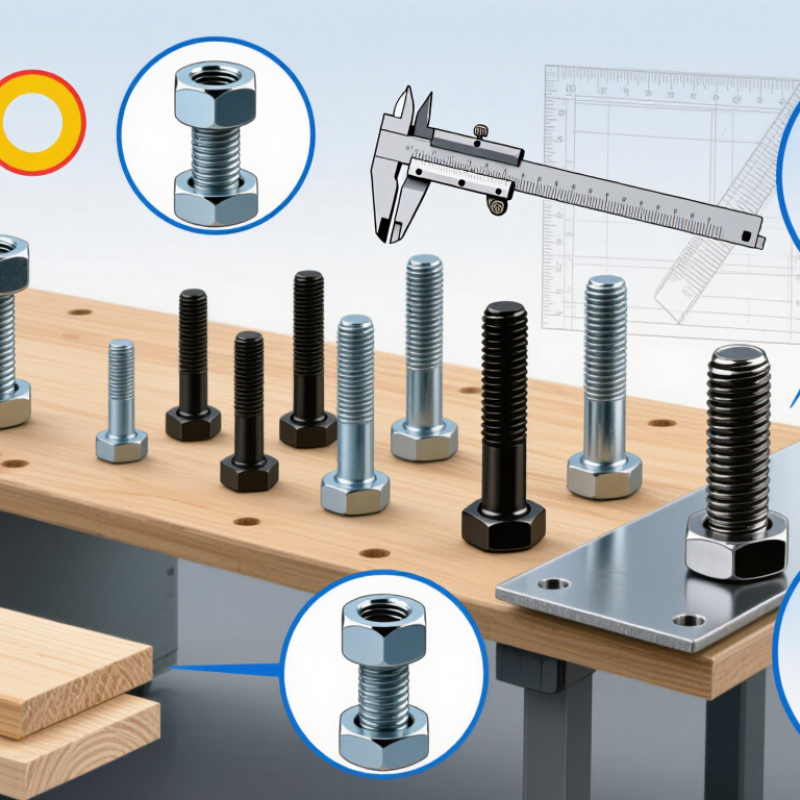
Choosing the right carriage bolt starts with diameter, length, and thread type—not appearance. Diameter controls fit and shear resistance. Common inch sizes include 1/4, 5/16, 3/8, and 1/2 inch. Metric work often uses M6, M8, or M10. ASME B18.5 defines dimensional requirements for round-head square-neck bolts. ISO 898-1 shows that strength depends on the bolt’s property class, not diameter alone. A larger bolt can still be unsuitable if its material grade is unknown.
Length requires careful measurement. Measure from beneath the rounded head to the bolt tip. Include the thickness of washers, joint plates, and any locknut. The threaded section must extend fully through the nut, but excessive thread can interfere with moving parts. In field installations, I usually allow two visible threads beyond the nut. That rule is practical, not universal. Joint design still matters.
Thread type affects installation and holding performance. Inch fasteners commonly use UNC coarse threads or UNF fine threads. Coarse threads tolerate minor contamination and work well in softer materials. Fine threads provide more adjustment and greater thread engagement in thinner sections. Metric bolts may use standard or fine pitch, and pitch must match the nut exactly. ASME B1.1 and ISO 261 provide recognized thread specifications. Never force a mismatched nut. It may feel tight while damaging the threads. Measure twice. Then verify the standard, grade, length, and corrosion requirements before ordering.
| System | Nominal Diameter | Common Length Range | Thread Type | Thread Pitch / TPI | Recommended Use | Selection Guidance |
|---|---|---|---|---|---|---|
| Metric Carriage Bolts | ||||||
| Metric | M5 | 20–50 mm | Coarse metric | 0.80 mm pitch | Light-duty brackets, small timber joints, and sheet-metal assemblies | Choose when a compact fastener and limited clamping load are required |
| Metric | M6 | 20–60 mm | Coarse metric | 1.00 mm pitch | Furniture frames, light structural joints, and general workshop assembly | A common general-purpose diameter for moderate loads |
| Metric | M8 | 20–80 mm | Coarse metric | 1.25 mm pitch | Wood-to-metal connections, fences, frames, and equipment mounting | Suitable for many medium-duty applications where increased strength is needed |
| Metric | M10 | 25–100 mm | Coarse metric | 1.50 mm pitch | Heavy timber joints, machinery frames, and outdoor structural assemblies | Use when a larger shank and higher clamping capacity are required |
| Metric | M12 | 30–120 mm | Coarse metric | 1.75 mm pitch | Heavy-duty frames, structural timber, trailers, and equipment supports | Confirm hole diameter, washer size, and joint thickness before ordering |
| Metric | M16 | 40–150 mm | Coarse metric | 2.00 mm pitch | Large structural joints, heavy machinery, and high-load timber connections | Use only when the connected materials and supporting structure can accept the larger hole |
| Inch Carriage Bolts | ||||||
| Inch | 1/4 in | 3/4–3 in | UNC coarse thread | 20 TPI | Light-duty woodwork, small brackets, and general repairs | A practical choice for light assemblies using inch-based hardware |
| Inch | 5/16 in | 1–4 in | UNC coarse thread | 18 TPI | Furniture, fencing, decking, and medium-duty joints | Provides more clamping capacity than a 1/4-inch bolt without a large hole |
| Inch | 3/8 in | 1–5 in | UNC coarse thread | 16 TPI | Deck frames, timber construction, equipment mounting, and outdoor structures | One of the most widely used sizes for medium-duty applications |
| Inch | 1/2 in | 1-1/2–6 in | UNC coarse thread | 13 TPI | Heavy timber joints, trailers, structural frames, and machinery supports | Select a suitable washer and verify that the joint can accommodate the larger shank |
| Inch | 5/8 in | 2–8 in | UNC coarse thread | 11 TPI | Large timber structures, heavy equipment, and high-load connections | Use for substantial joints where increased diameter and embedment are available |
| Inch | 3/4 in | 2-1/2–10 in | UNC coarse thread | 10 TPI | Very heavy structural timber, industrial frames, and large equipment supports | Check clearance, edge distance, washer diameter, and the required tightening torque |
| Important sizing notes: Carriage bolt length is normally measured from directly under the head to the end of the threaded shank. Select a length that passes through all joined materials, washers, and any nut while leaving approximately two to three full threads beyond the nut. Metric and inch threads are not interchangeable. Coarse threads listed above are common for carriage bolts because they provide good thread engagement and are suitable for wood, outdoor, and general structural assembly. Actual availability, head dimensions, square-neck dimensions, material grade, and finish may vary by applicable fastener standard. | ||||||
Related Posts
-
7 Tips for Choosing High Quality Carriage Bolts?
-
How to Choose High Quality Carriage Bolts?
-
Top Stainless Carriage Bolt Specifications Buyers Need to Know?
-
Why Choose Hot Sale Carriage Bolt for Your Projects?
-
Top 10 Carriage Bolt Types for Your Next Project?
-
Top 10 Truss Head Carriage Bolt Suppliers in China?