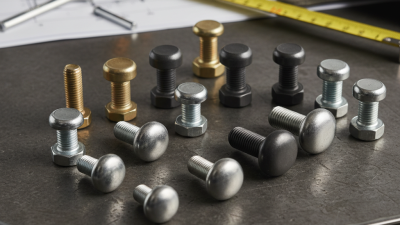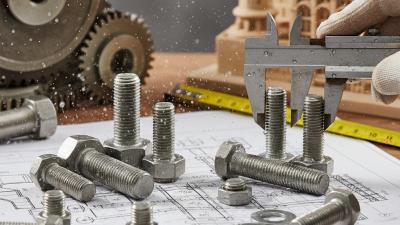
Why Choose Stainless Bolts for Global Procurement?

Global procurement teams increasingly treat Stainless Bolts as engineered components, not simple catalogue items. World Stainless reported approximately 58.4 million tonnes of stainless steel production in 2023. That scale reflects durable demand across construction, transport, food processing, and energy infrastructure. It also supports a broader sourcing network, with qualified mills and fastener manufacturers operating across major industrial regions.

John H. Bickford, a recognized bolted-joint authority, wrote, “The bolted joint is the most common form of mechanical fastening.” His observation remains practical. A bolt may sit outdoors for twenty years, beside salt spray, cleaning chemicals, or constant vibration. The selected alloy, thread quality, surface finish, and installation torque can decide whether that joint survives. The wrong grade can still fail.

That detail matters in global procurement. The International Stainless Steel Forum describes stainless steel as highly recyclable, while technical guidance from the British Stainless Steel Association emphasizes correct alloy selection for corrosion environments. Grade 304 may suit indoor equipment. Grade 316 usually offers stronger resistance near chlorides. Yet 316 is not invincible, and “stainless” does not mean maintenance-free.

The commercial case is persuasive, but incomplete. Higher purchase prices can reduce replacements, downtime, and emergency freight. However, buyers still need traceable certificates, dimensional inspection, and verified mechanical properties. Small savings can become expensive lessons. A reliable sourcing strategy compares lifecycle performance, supplier evidence, and local environmental exposure before approving Stainless Bolts for international projects.

Why Choose Stainless Bolts for Global Procurement?

Stainless Bolts: Definition, Materials, and Key Characteristics

Why Choose Stainless Bolts for Global Procurement?

Stainless Bolts: Definition, Materials, and Key Characteristics

A stainless bolt is a threaded fastener made from corrosion-resistant steel. Its chromium content forms a thin, self-healing passive film. ISO 3506 specifies at least 10.5% chromium for stainless fasteners. That film protects threads, heads, and contact surfaces from moisture and oxygen. Not all stainless is equal.

Common austenitic grades include 304 and 316. Grade 304 typically contains about 18% chromium and 8% nickel. Grade 316 adds roughly 2–3% molybdenum, improving resistance to chlorides and coastal exposure.

World Stainless reported 58.4 million tonnes of stainless steel production in 2023. This scale supports broad global availability, but grade substitution still creates procurement risks. A bolt may look identical while its chemical performance differs sharply.

Stainless bolts offer strong corrosion resistance, stable appearance, and dependable service across industrial equipment. They also resist many cleaning chemicals and temperature changes. However, stainless-on-stainless contact can cause galling during tightening. Galling is real. Controlled torque and suitable assembly practice matter.

The NACE IMPACT Study estimated global corrosion costs at US$2.5 trillion annually, equal to about 3.4% of global GDP. I would not treat “stainless” as a complete specification.

Buyers should verify the grade, tensile class, dimensions, surface condition, heat number, and mill test certificate before shipment.

Corrosion Resistance Across Global Climates and Industries

Stainless bolts support global procurement because corrosion conditions rarely stay predictable. Coastal air carries chlorides, while tropical humidity keeps surfaces wet for longer periods. In colder regions, road salt creates another aggressive environment.

The NACE International IMPACT study estimated global corrosion costs at about US$2.5 trillion annually, equal to 3.4% of global GDP. That figure explains why fastener selection deserves engineering attention, not just price comparison.

Austenitic stainless grades offer a passive chromium-oxide film that reforms after minor surface damage. However, stainless does not mean corrosion-proof. That distinction matters. Grade selection should match exposure, temperature, load, and cleaning chemicals.

Molybdenum-bearing grades generally provide better resistance to chloride pitting than standard chromium-nickel grades. This can benefit marine equipment, food-processing lines, chemical facilities, and outdoor infrastructure.

Yet crevices under washers, trapped water, and contact with carbon steel can still cause staining or localized attack. In practice, installation quality often decides whether laboratory performance survives global transport and service.

Tips: Specify the environment before selecting the bolt. Request material certificates and corrosion-test evidence. Prevent mixed-metal contact where practical. Inspect threads and bearing surfaces after installation. Salt-spray results help comparison, but they cannot fully reproduce real climates. A careful procurement team should also review cleaning agents and maintenance intervals. No specification is perfect. Field feedback should refine the next purchase cycle.
Strength, Durability, and Performance Under Working Loads

Why Choose Stainless Bolts for Global Procurement?

Stainless bolts earn attention when joints face moisture, heat, vibration, and repeated working loads. Their strength helps maintain clamping force around equipment frames, pipe supports, and outdoor structures. Austenitic stainless grades, such as 304 and 316, also resist rust in many demanding environments. Yet stainless steel is not automatically suitable for every load. Engineers must check tensile strength, proof load, thread engagement, and temperature limits before approval. Small details matter.

Durability depends on more than material selection. Clean threads improve torque accuracy and reduce uneven loading. Proper washers can protect softer surfaces and spread pressure across the joint. Stainless fasteners may suffer galling during installation, especially with high-speed tools or dry threads. Controlled tightening helps, but field conditions are rarely perfect. That is worth admitting. A bolt can look excellent and still fail after poor assembly or unexpected vibration. Procurement teams should request traceable test reports, dimensional checks, and clear inspection records. These documents support reliable decisions across suppliers and regions.

Tips: Match the bolt grade to the joint design, not only the corrosion environment. Use calibrated torque tools and clean mating threads. For critical connections, verify preload through an engineering review. Keep spare samples for incoming inspection. One overlooked washer can change the load path.

Standards, Grades, and Compatibility for International Purchasing

Why Choose Stainless Bolts for Global Procurement?

Stainless bolts support international sourcing because their grades and dimensions can be specified clearly. World Stainless reported 58.4 million metric tonnes of stainless steel production in 2023. That scale supports broad availability, but availability does not guarantee suitability.

Standards matter more than appearance. ISO 3506 defines mechanical properties for stainless steel fasteners, including austenitic grades such as A2 and A4. ASTM F593 covers stainless steel bolts, screws, studs, and other externally threaded fasteners. These systems are not automatically interchangeable. Procurement teams should confirm tensile strength, proof load, hardness, and corrosion requirements on the same purchase order. A mill test certificate should identify the heat number and grade. Keep the paperwork.

Compatibility also includes threads, dimensions, and the assembled environment. Metric threads should not be mixed with UNC or UNF threads, even when diameters appear similar. A stainless bolt joined to carbon steel may create galvanic corrosion in wet conditions. Salt exposure makes this risk more serious. A4-grade material often suits chloride-prone environments better than A2, but geometry and installation still matter. ISO 3506 does not replace application testing. That is easy to overlook. Before approving a shipment, inspect thread fit, head markings, certificates, and sample torque performance. One practical weakness remains: a higher grade cannot correct poor design, wrong washers, or contaminated installation tools.

Why Choose Stainless Bolts for Global Procurement? - Standards, Grades, and Compatibility for International Purchasing
Stainless Grade Common Material Comparison Primary International Standard Minimum Tensile Strength Minimum 0.2% Proof Stress Typical Service Environment Matching Nut and Washer Guidance
A2-50 Commonly comparable to austenitic 304-family stainless steel; comparison is not a substitute for certification. ISO 3506-1 property class A2-50 500 MPa 210 MPa General indoor use, light outdoor exposure, furniture, equipment housings, and non-aggressive atmospheres. Use an A2-compatible nut, such as ISO 3506-2 A2, with an A2-compatible washer.
A2-70 Commonly comparable to austenitic 304-family stainless steel; cold-worked condition provides higher strength. ISO 3506-1 property class A2-70 700 MPa 450 MPa General outdoor service, architectural assemblies, machinery, and mildly corrosive environments. Use an A2-compatible nut and washer. Avoid mixing with carbon-steel fasteners where galvanic corrosion may occur.
A4-70 Commonly comparable to austenitic 316-family stainless steel; comparison is not a substitute for chemical or mechanical verification. ISO 3506-1 property class A4-70 700 MPa 450 MPa Coastal atmospheres, humid industrial areas, food-processing equipment, and environments with moderate chloride exposure. Use an A4-compatible nut and washer to maintain corrosion resistance across the joint.
A4-80 Commonly comparable to cold-worked 316-family stainless steel; verify the specified product standard before substitution. ISO 3506-1 property class A4-80 800 MPa 600 MPa Higher-strength applications in marine-adjacent, chemical, and heavily humid environments where A4 corrosion resistance is required. Use an A4-compatible nut and washer. Confirm tightening procedure because higher-strength stainless fasteners can gall.
C1-70 Martensitic stainless fastener grade; not directly interchangeable with A2 or A4 austenitic grades. ISO 3506-1 property class C1-70 700 MPa 500 MPa Applications requiring higher hardness or strength, with less demanding corrosion conditions than those served by A4. Use a C1-compatible nut and washer. Check hardness, corrosion requirements, and heat-treatment condition.
ASTM F593 Group 1 Corrosion-resistant alloy fasteners commonly manufactured from 304-family stainless steel. ASTM F593; select the specified alloy and condition Varies by ASTM condition Varies by ASTM condition North American procurement requiring ASTM mechanical and dimensional documentation. Pair with nuts meeting the specified ASTM nut standard and compatible alloy or coating. Do not equate the designation automatically with ISO A2-70.
ASTM F593 Group 2 Corrosion-resistant alloy fasteners commonly manufactured from 316-family stainless steel. ASTM F593; select the specified alloy and condition Varies by ASTM condition Varies by ASTM condition North American projects exposed to moisture, chlorides, or industrial contaminants, subject to engineering review. Pair with nuts meeting the specified ASTM nut standard and compatible alloy or coating. Confirm condition and strength before substitution.
International Compatibility and Purchasing Checks
Procurement Dimension Recommended Specification Why It Matters Internationally Verification Point Before Order Approval
Product dimensions Specify nominal diameter, length, head style, thread form, thread pitch, and tolerance. Metric ISO products and inch-based products are not dimensionally interchangeable. For metric fasteners, identify the applicable ISO product standard, such as ISO 4014 for partially threaded hexagon head bolts or ISO 4017 for fully threaded products.
Thread system Use ISO metric threads or Unified inch threads; state the system explicitly. A similar nominal diameter does not guarantee compatibility between metric and inch threads. Confirm thread designation, pitch or threads per inch, class of fit, and whether the mating nut uses the same system.
Mechanical property class For ISO stainless fasteners, specify the complete designation, such as A2-70 or A4-80. The letter identifies the stainless family while the number identifies the strength class. Request a material test report or certificate showing the applicable standard, grade, property class, and test results.
Dimensional standard Specify the exact product standard for head dimensions, thread length, and tolerances. Equivalent-looking bolts may have different head heights, wrench sizes, or threaded lengths. Check drawing dimensions against the applicable ISO, DIN, EN, ASTM, or customer specification before shipment.
Corrosion compatibility Match bolt, nut, and washer material families whenever practical. Dissimilar metals can create galvanic corrosion in wet or salt-contaminated environments. Review contact metals, moisture, chloride exposure, protective coatings, insulation requirements, and drainage design.
Installation control Use clean threads, suitable anti-seize where permitted, and calibrated torque equipment. Stainless threads have a higher risk of galling, especially during fast installation or repeated assembly. Validate the torque method on the actual bolt, nut, lubricant, washer, and surface condition; torque values are not universal.
Traceability Require lot identification, inspection records, certificates, and packaging labels. Traceability reduces substitution risk across different countries and supply channels. Match the lot number on the product or packaging with the certificate and purchase-order requirements.
Regulatory documentation Define required declarations, restricted-substance information, and export documentation in the purchase order. Documentation requirements can differ by destination, industry, and end use. Confirm applicable customs descriptions, country-of-origin information, testing records, and project-specific compliance documents.

Strength values shown for ISO 3506 property classes are minimum values in MPa and should be read together with the complete product standard, diameter range, manufacturing condition, and certificate requirements. ASTM F593 properties depend on the specified alloy and condition and should not be converted to an ISO property class without engineering approval.

Cost, Supply, and Quality Factors in Global Procurement

Why Choose Stainless Bolts for Global Procurement?

Cost, Supply, and Quality Factors in Global Procurement

Stainless bolts often cost more at purchase, but price is only one part of global sourcing. Their corrosion resistance can reduce replacements, field repairs, and downtime in humid or coastal environments. A procurement team should compare total landed cost, including freight, duties, inspection, storage, and potential failure expenses.

Supply reliability depends on more than available stock. Confirm the required grade, dimensions, thread standard, packaging, and production capacity before placing an order. Grades such as 304 and 316 serve different conditions, so material selection needs technical review. Request mill certificates, dimensional reports, and batch traceability. Small details matter.

Quality must remain consistent across shipments. Sample checks should cover thread fit, surface condition, hardness, and mechanical performance. Independent inspection can reveal mixed grades or damaged threads before containers leave the factory. It adds cost. Sometimes, it prevents a much larger loss.

A spreadsheet can mislead. A lower unit price may hide longer lead times or higher rejection rates. Stainless bolts are not automatically the best option for every project. Poor specification, weak documentation, or rushed approvals can still create problems. Procurement decisions improve when engineers, quality staff, and logistics teams review the same evidence.