How to Choose the Right Stainless Bolt for Your Project?
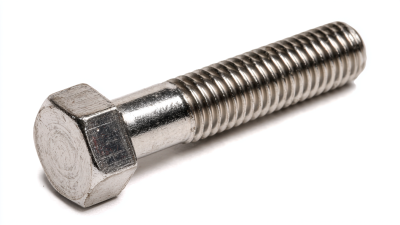
Choosing the right Stainless Bolt can greatly affect the success of your project. The material properties and sizes vary greatly, making the selection process crucial. Understanding your specific needs is essential.
Stainless Bolts come in different grades, such as 304 and 316. Each grade offers unique benefits. For instance, 316 provides better corrosion resistance in marine environments. Lacking this detail could lead to issues later.
Many overlook the importance of thread types and lengths. This can result in improper fits or failure. Research is key. Designers often learn this the hard way. Aim for a balance between cost and quality. Remember, the right choice strengthens your project’s foundation.
Understanding Stainless Steel Grades: 304, 316, and More
When selecting stainless bolts, understanding the different grades is essential. Two common grades are 304 and 316. Grade 304 is widely used for its excellent resistance to corrosion and good weldability. It's suitable for many indoor projects but may not withstand harsh environments. In contrast, grade 316 offers superior resistance to saltwater and chemicals. It’s ideal for marine applications and outdoor use. Knowing the differences helps you choose wisely.
Tips: Always consider the environment. If your project is near the ocean, go for 316. For indoor use, 304 might be adequate.
It’s also crucial to be aware of the potential downsides. While 304 is cost-effective, it could corrode faster under extreme conditions. 316 tends to be pricier. Make sure to evaluate whether the benefits justify the cost.
Understanding these grades can prevent future issues. Remember, the right bolt will contribute to project longevity. Don’t rush your decision. Take the time to assess your specific needs before making a choice.
Mechanical Properties of Stainless Bolts: Strength, Ductility, and Tolerance
When selecting stainless bolts, understanding their mechanical properties is crucial. Strength, ductility, and tolerance directly impact performance in various applications. Stainless bolts come in multiple grades, such as 304 and 316, each offering different strengths. For instance, 316 bolts are more resistant to corrosion, making them suitable for marine environments. However, their cost is often higher than that of 304 bolts.
Ductility is another essential property. It allows bolts to deform under stress without breaking. This characteristic is particularly vital in construction, where fluctuations in load occur. Choosing bolts with optimal ductility ensures they can accommodate such stresses. However, sometimes, achieving the ideal balance between strength and ductility can be challenging.
Tolerance refers to the allowable deviation from a bolt's specified dimensions. High tolerance ensures a secure fit, which is critical for safety and durability. Many engineers overlook this factor, leading to bolting failures. It's essential to thoroughly evaluate these properties before making a decision. The goal should be to align the bolt's characteristics with the project's specific needs. Careful consideration can prevent costly mistakes and enhance project reliability.
How to Choose the Right Stainless Bolt for Your Project?
| Bolt Grade |
Tensile Strength (MPa) |
Yield Strength (MPa) |
Elongation (%) |
Tolerance (mm) |
| A2-70 |
700 |
450 |
40 |
0.2 |
| A4-80 |
800 |
600 |
35 |
0.2 |
| A2-50 |
500 |
300 |
32 |
0.25 |
| A4-70 |
700 |
500 |
40 |
0.2 |
Corrosion Resistance in Stainless Bolts: Choosing for Environmental Factors
When selecting stainless bolts, understanding corrosion resistance is crucial. Different environments affect how stainless steel reacts. For example, coastal areas have high humidity and salt exposure, increasing the risk of corrosion. Using a higher grade stainless steel, like 316, offers better protection in these settings. It is essential to consider the specific environmental factors your project will encounter.
In addition to the grade, the finish of the bolt plays a vital role. A polished finish can aid in preventing corrosion, while a rougher surface may trap moisture and contaminants. Regular inspection of bolts is also necessary to detect early signs of corrosion.
This proactive approach can help mitigate potential failures. Even with the right material, maintenance is vital. Environmental conditions can change, and regular checks ensure long-term durability. You might find surprises along the way. Corrosion can be unpredictable. Understanding these nuances is essential for any successful project.
Sizing and Thread Standards for Stainless Bolts: A Guide to Fit and Compatibility
Choosing the right stainless bolt requires careful consideration of sizing and thread standards. Bolt sizes are typically described by diameter and length. Common diameters include 6mm, 8mm, and 10mm. Length options often range from 20mm to 100mm. The fit of a bolt must align with the components it joins. Misfitting bolts can lead to structural failure, which is critical in construction settings.
Thread standards include Unified National Coarse (UNC) and Unified National Fine (UNF). These standards determine how threads are spaced and their pitch. According to a report by the Fastener Quality Act, 30% of fastener failures relate to thread misalignment. Proper selection ensures a secure fit, minimizing risks in high-stress applications.
Also, consider the environmental factors. Exposure to moisture can cause corrosion. In such cases, opting for bolts with higher corrosion resistance is vital. Reflecting on past projects can highlight mistakes made in bolt selection. Learning from these experiences can fuel better choices in the future.
Stainless Bolt Size Distribution by Diameter
Applications of Stainless Bolts: Industry-Specific Considerations and Needs
When selecting stainless bolts, it’s crucial to consider the specific application. Different industries have unique requirements. For instance, in construction, bolts must withstand heavy loads and environmental conditions. Corrosion resistance is a key feature in marine applications. Here, saltwater exposure can degrade lesser materials quickly.
The automotive industry demands high-strength fasteners for safety and performance. Stainless bolts must endure vibrations and high-stress environments. Food processing facilities require bolts that comply with hygiene standards. Here, cleanliness and non-reactivity are critical. Failure to meet these needs may lead to costly production downtimes or safety hazards.
In aerospace, weight and reliability are paramount. Stainless bolts must be lightweight yet able to handle extreme stress. However, finding the right balance can sometimes be a trial-and-error process. Not every fastener will perform as expected in every situation. Regular testing and evaluation are essential for optimal results. This iterative approach can refine choices over time, ensuring that the selected bolts meet exact specifications.