Top 10 Carriage Bolt Types for Your Next Project?
When embarking on your next project, selecting the right fasteners is crucial. Carriage bolts stand out for their unique design and versatility. They are often used in woodworking, metalworking, and other construction applications. The rounded head provides a smooth finish while the square neck prevents rotation during installation.
There are various types of carriage bolts available. Each type serves a specific need, catering to different materials and environments. Some may find it challenging to choose the best option. Factors like length, diameter, and coating should be considered when making your decision.
Understanding carriage bolt types can enhance your project's quality. The right choice can lead to stronger and more durable constructions. However, overlooking specific details can lead to problems and setbacks. Take the time to examine what each type offers. You may discover new solutions for your fastening needs.
Overview of Carriage Bolts: Definition and Common Uses
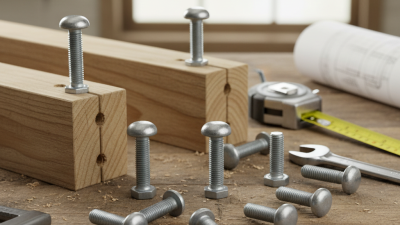
Carriage bolts are essential fasteners in various construction and DIY projects. They feature a rounded head and a square neck that prevents spinning when tightened. This design makes them ideal for wood-to-wood or wood-to-metal connections. Common materials include steel and stainless steel, which offer strength and durability. Carriage bolts hold securely, ensuring structural integrity in different applications.
These bolts are widely used in furniture assembly, deck building, and fencing. Their unique shape allows for easy installation with a wrench or socket. However, improper use can lead to issues. A bolt that's too short may not provide adequate holding power. Similarly, over-tightening can strip the wood or the bolt itself. It’s crucial to select the right bolt size for your specific application.
While carriage bolts are generally reliable, they have limitations. They are not suitable for high-stress applications. Understanding the load requirements is vital to ensure safety and effectiveness. Additionally, consider factors like weather resistance for outdoor projects. Reflecting on these details will enhance your project outcomes and optimize your use of carriage bolts.
Types of Carriage Bolts: Comparing Materials and Sizes
When selecting carriage bolts for your project, material and size are critical factors. Steel is a common choice due to its strength and durability. Stainless steel bolts offer corrosion resistance, making them ideal for outdoor use. Plastic carriage bolts can be lightweight and non-corrosive, but their load-bearing limits are much lower. Each material serves a unique purpose; understanding the specifics can help you choose wisely.
Consider the size of the bolt. Length and diameter should match your project requirements. Standard lengths range from 1 inch to 12 inches, with diameters typically between 1/4 inch and 1 inch. A mismatch can lead to tight fits or insufficient grip. Pay attention to these details. A bolt that's too short won't secure the materials together. A bolt that’s too long can protrude, posing safety risks.
Different projects require different bolt types. Sometimes, you might find that the strongest option is not the most practical one. Trial and error could be necessary, especially in unique builds. Reflecting on past projects, some may have benefitted from a wider variety of bolts. Learn from those experiences. The right bolt can make all the difference, but it takes careful consideration to find it.
Top 10 Carriage Bolt Types for Your Next Project
Load Capacity and Strength Factors for Different Carriage Bolt Types
When selecting carriage bolts, understanding load capacity and strength is crucial. Different types of carriage bolts exhibit variance in material, diameter, and design, affecting their overall performance. For example, a standard steel carriage bolt can withstand loads ranging from 1,000 to 3,000 pounds, depending on its diameter. The American Wood Council reports that using bolts within recommended load limits enhances structural integrity in projects.
Certain carriage bolt types are specifically designed to handle higher loads. Grade 8 bolts, for instance, made from alloy steel, can tolerate up to 1,600 pounds with added safety in tension applications. However, many users overlook that galvanized finishes can reduce strength in certain environmental conditions. This factor must be considered, especially if the project involves exposure to moisture or corrosive elements.
Craftsmen often underestimate the importance of bolt length and thread count. A longer bolt may provide more holding power but can complicate installation. Similarly, finer threads can increase shear strength but might diminish clamping force. Therefore, balancing these factors is essential. Taking the time to analyze specific project needs can lead to better choices, preventing failures and ensuring lasting results.
Top 10 Carriage Bolt Types for Your Next Project
| Bolt Type |
Diameter (inches) |
Length (inches) |
Material |
Load Capacity (lbs) |
| Standard Carriage Bolt |
1/4 |
3 |
Steel |
800 |
| Heavy-Duty Carriage Bolt |
3/8 |
4 |
Stainless Steel |
1200 |
| Carriage Bolt with Square Neck |
1/2 |
5 |
Steel |
1500 |
| Coated Carriage Bolt |
5/16 |
6 |
Zinc Plated Steel |
900 |
| Galvanized Carriage Bolt |
3/8 |
7 |
Galvanized Steel |
1100 |
| Tamper-Proof Carriage Bolt |
1/2 |
4 |
Steel |
1600 |
| Bolted Carriage Bolt |
1/4 |
8 |
Stainless Steel |
850 |
| Low-Head Carriage Bolt |
3/8 |
5 |
Steel |
1000 |
| Flat-Head Carriage Bolt |
5/16 |
6 |
Stainless Steel |
900 |
| High-Strength Carriage Bolt |
1/2 |
12 |
Alloy Steel |
2000 |
Installation Techniques for Optimal Performance of Carriage Bolts
When working with carriage bolts, installation techniques can significantly influence performance. Proper alignment is crucial. A misaligned bolt may not achieve the necessary torque, compromising strength. According to industry reports, improper installation can reduce load-bearing capacity by up to 30%. This statistic highlights the importance of precise placement and tightening.
Using the right tools ensures effective installation. A torque wrench is indispensable. It allows users to apply consistent and adequate pressure. Reports indicate that using a torque wrench can increase the lifespan of carriage bolts significantly. Over-tightening can lead to bolt fracture. Conversely, under-tightening risks joint failure. The balance is vital during installation.
It's essential to select appropriate materials based on your project needs. For example, galvanized bolts are great for outdoor projects due to their resistance to corrosion. However, in environments with high humidity, stainless steel bolts may offer better durability. Testing different combinations may reveal performance issues that can arise from material choices. No single method guarantees optimal results. Prior evaluation can avoid potential pitfalls.
Industry Standards and Certifications for Quality Assurance in Carriage Bolts
Carriage bolts are essential fasteners in various projects, yet quality assurance remains paramount. Industry standards play a critical role in ensuring that these bolts meet specific application requirements. For instance, ASTM A307 specifies the requirements for carbon steel bolts, ensuring strength and corrosion resistance. Such standards help maintain uniformity across the industry and enhance durability.
Additionally, the American National Standards Institute (ANSI) provides guidelines that guarantee reliability and performance. According to recent statistical reports, about 25% of fastener failures are linked to poor quality products. This underscores the importance of using certified carriage bolts. Choosing bolts that meet these standards leads to fewer structural issues.
Furthermore, industry certifications, such as ISO 9001, enhance consumer confidence. These certifications indicate that manufacturers follow strict quality control processes. It's noteworthy to reflect on the impact of substandard bolts. They can lead to project delays and increased costs. Using high-quality, certified fasteners can prevent these pitfalls and ensure successful project completion.