China Top 10 Mushroom Head Carriage Bolt Suppliers

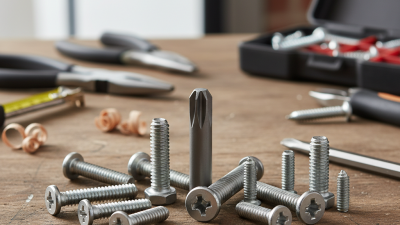
Choosing a reliable supplier for a Mushroom Head Carriage Bolt takes more than comparing prices. Buyers need to check material options, dimensional accuracy, thread quality, and finish consistency. A smooth, rounded head should sit neatly against the assembled surface, while the square neck helps resist rotation during installation. Small details matter. A rough thread or uneven coating can slow assembly and create avoidable rework.

This guide introduces ten Chinese suppliers for buyers seeking practical sourcing options. It considers factors such as product range, manufacturing information, quality-control practices, customization capability, and responsiveness. These points can help narrow a shortlist, but they do not replace direct verification. Request current drawings, material specifications, inspection records, and samples before placing an order. Compare like with like, especially when suppliers quote different grades or surface treatments. There is no single best choice for every project. Some details may remain unclear until a sample is examined, and that deserves attention rather than guesswork. Supplier claims should be checked against documented evidence and actual communication. A careful review can reduce surprises, though it cannot remove every sourcing risk.
China Top 10 Mushroom Head Carriage Bolt Suppliers

Mushroom Head Carriage Bolts: Design, Uses, and DIN 603 Basics

Mushroom Head Carriage Bolts: Design, Uses, and DIN 603 Basics

A mushroom head carriage bolt has a smooth, rounded top and a square neck beneath it. The neck grips a prepared hole, helping resist rotation as a nut is tightened. This can make assembly easier when only one side is accessible. You’ll see the design in timber frames, outdoor seating, and brackets joining wood to metal.

Small detail. The square neck still needs a correctly sized hole to seat properly; a loose fit can let the bolt spin.

DIN 603 describes carriage-bolt dimensions and form, including the head and neck. It does not, by itself, guarantee a bolt’s strength or corrosion resistance. Check the specified material, property class, coating, and dimensions against the actual job. Grand View Research’s 2024 Global Fasteners Market report estimated the broader fasteners market at USD 90.6 billion in 2023, with projected growth from 2024 to 2030. That figure covers many fastener types, not carriage bolts alone, but it shows the scale of the hardware sector. For purchasing, compare drawings and samples rather than relying on “DIN 603” as a complete performance specification. A neat dome looks simple; the details underneath matter more.

DIN 603 Size Ranges, Thread Types, and Key Dimensional Checks

DIN 603 mushroom head carriage bolts are selected by more than nominal diameter. Suppliers commonly offer metric sizes such as M5 through M16, but available diameters and lengths vary. Confirm the size range against the actual drawing, not a broad catalogue heading. Small detail, big difference.

Thread type needs equal care. Metric coarse threads are common, while thread length may be full or partial depending on bolt length and supplier specification. Check the pitch with a thread gauge, and confirm whether the quoted length is measured from beneath the head to the bolt tip. Do not assume two bolts with the same M-size have matching engagement. A sample can settle doubts.

For dimensional checks, measure shank diameter, under-head length, head diameter and head height. Also inspect the square neck’s width and height; it should seat properly in the mating hole without excessive play. Use calipers on several pieces, since burrs or coating can affect readings. I still recheck the square neck by hand. Drawings can miss a small burr. Compare measured values with the agreed tolerance and finish requirements before approving a production lot.

DIN 603 Mushroom Head Carriage Bolts: Metric Coarse Thread Pitch

Reference thread pitches for common ISO metric coarse-thread sizes. The chart shows dimensional reference data, not supplier rankings.

Dimensional checks: Confirm nominal diameter and thread pitch, bolt length measured from beneath the head, square-neck dimensions, and mushroom-head diameter and height against the applicable drawing or standard. Check thread engagement and whether the specified thread is full or partial before ordering.

Steel and Stainless Grades: ISO 898-1 Classes 4.6 and 8.8, A2-70

China Top 10 Mushroom Head Carriage Bolt Suppliers

For carriage bolts, the mushroom head provides a smooth, rounded surface, while the square neck helps resist rotation in timber. Head shape does not determine strength. ISO 898-1:2013 gives property classes 4.6 and 8.8 nominal tensile-strength levels of 400 MPa and 800 MPa, respectively. Their class numbers also indicate nominal yield-strength ratios of 0.6 and 0.8. These figures help buyers compare carbon and alloy steel fasteners, but dimensions and test conditions still matter.

For stainless options, ISO 3506-1:2020 specifies A2-70 fasteners with a minimum tensile strength of 700 MPa. A2 identifies an austenitic stainless steel group; 70 denotes its strength class. That distinction matters. Stainless steel can suit damp settings, but it is not immune to corrosion in every environment. Salt exposure, crevices, and dissimilar metals can change performance.

A buyer should check the certificate against the stated standard and confirm the bolt’s diameter, thread, and material marking. In practical assembly, the square neck must seat firmly; otherwise, tightening may turn the bolt and mark the workpiece. A standards table cannot predict every joint. I would still verify the actual load, washer arrangement, and exposure conditions before selecting 4.6, 8.8, or A2-70.

China’s Top 10 Suppliers: Product Range, Manufacturing, and Export Profiles

China’s top ten mushroom head carriage bolt suppliers are best compared by what they can repeatedly make, not by catalog breadth alone. Their product ranges may include carbon-steel and stainless-steel bolts, varied diameters, lengths, thread options, and surface finishes. Look closely at the square neck beneath the domed head. It helps resist rotation during installation. Ask how suppliers control dimensions, head profiles, and coating thickness across production batches. Small deviations matter. Request sample parts and inspection records, then compare measurements with your technical drawing. Manufacturing capabilities may include cold forming, thread rolling, heat treatment, and finishing, but confirm which steps happen in-house.

Supplier profiles also differ in export readiness. Some can manage custom packaging and mixed-size orders; others focus on standard products and larger production runs. Check carton labels, corrosion protection, pallet strength, and whether quoted lead times include final inspection. Ask for clear packing lists and shipment documentation before placing an order. A polished brochure proves little. One practical check is a small trial order: track response speed, dimensional consistency, and the condition of the packaging on arrival. Not every supplier will suit every project, and advertised capacity can be difficult to verify. That uncertainty deserves attention.

How to Compare Suppliers: Testing, Coatings, Traceability, and Lead Times

China Top 10 Mushroom Head Carriage Bolt Suppliers

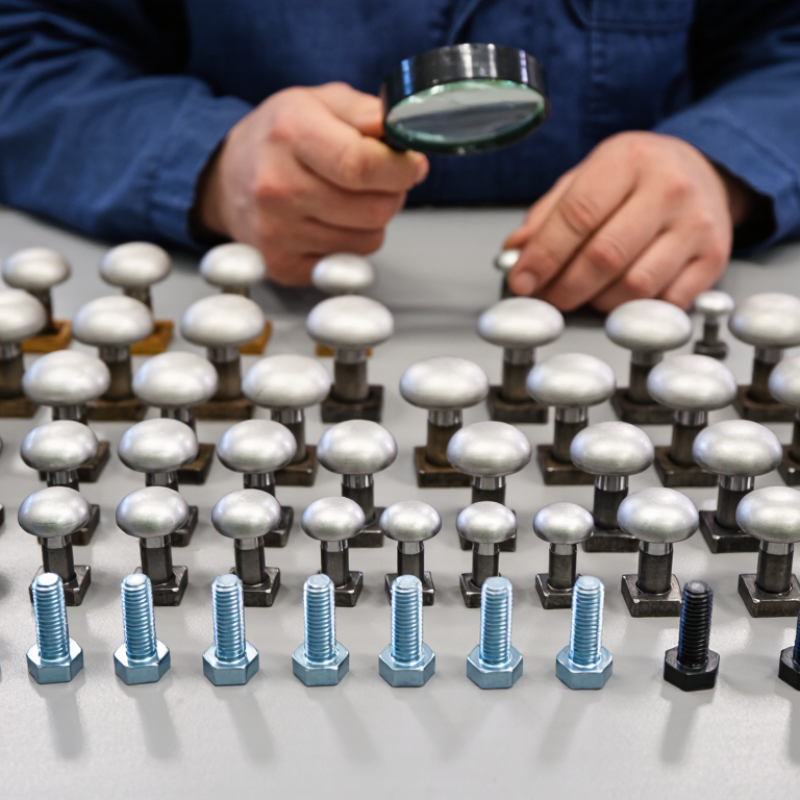
Compare suppliers using the same drawing, material grade, sample size, and acceptance limits. For mushroom head carriage bolts, inspect head diameter, square-neck fit, thread dimensions, and surface defects. Request tensile or hardness results where specified, plus inspection records linked to the sampled production lot. Ask for the raw data. A certificate without a clear sampling plan is not enough.

Coatings need precise comparison. State the coating type, target thickness, test method, and any restrictions on post-coating processing. ISO 4042 covers electroplated coatings for fasteners; ISO 9227 defines salt-spray test methods. Salt-spray hours alone do not guarantee service life, so ask how results relate to your environment. Keep it specific. World Steel Association’s World Steel in Figures 2025 reports 1,882.6 million tonnes of crude steel production worldwide in 2024. That scale makes batch-level material traceability more useful than broad claims about sourcing.

For traceability, check whether mill certificates, heat numbers, production lots, and inspection reports connect without gaps. Then compare quoted lead times by stage: raw material, forming, threading, coating, inspection, and shipment. Request a realistic schedule for the actual order quantity, not only a sample run. Capacity changes, and suppliers may not flag a delay early. Ask how often production updates are sent, and what evidence supports a revised ship date.

China Top 10 Mushroom Head Carriage Bolt Suppliers - How to Compare Suppliers: Testing, Coatings, Traceability, and Lead Times
Anonymized comparison framework | Indicative capabilities for supplier evaluation, not audited supplier-specific data or a ranking
Anonymous Supplier Profile Typical Product Scope Testing to Request Common Coating Options Traceability Evidence Indicative Production Lead Time Indicative MOQ Best-Fit Evaluation Point
Supplier Profile 01 Standard carbon-steel carriage bolts; common metric sizes and lengths Dimensions, thread fit, hardness, and tensile testing to the agreed specification Electroplated zinc; plain finish Batch number, material certificate on request, inspection record 15–25 days for standard items; confirm capacity and order quantity About 500–1,000 pieces per size Routine orders where standard sizes and a clear inspection plan are sufficient
Supplier Profile 02 Metric and inch-size bolts; mixed-size export orders Dimensional sampling, thread gauges, visual inspection, and agreed mechanical tests Electroplated zinc; zinc-nickel may be available by specification Lot identification on packaging; material and coating documents subject to order agreement 20–30 days; mixed sizes may require extra scheduling time About 1,000 pieces per size or finish Buyers needing several standard sizes in one consolidated shipment
Supplier Profile 03 Hot-dip galvanized carriage bolts for outdoor and construction use Dimensions before and after coating, coating appearance, and agreed mechanical tests Hot-dip galvanizing; coating requirements to be specified, such as ISO 10684 where applicable Heat or production lot reference; request coating and material reports for each lot 25–40 days, depending on coating batch and quantity About 1,000–2,000 pieces per size Projects where coating thickness, thread allowance, and fit after coating need early approval
Supplier Profile 04 Custom lengths, head dimensions, or non-standard shank details First-article dimensional report, thread verification, and tests defined by drawing or purchase specification Zinc plating or plain finish; special finishes subject to feasibility review Drawing revision, batch code, and inspection records linked to the order 30–45 days after drawing approval and sample sign-off About 2,000–5,000 pieces per custom specification Custom work; assess tooling charges, sample approval, and revision control
Supplier Profile 05 Stainless-steel carriage bolts in commonly requested grades and sizes Material verification, dimensions, thread fit, and mechanical checks as applicable to the specified grade Passivated or cleaned finish; confirm grade and finish requirements in writing Heat or lot number and material test certificate available by prior agreement 25–40 days; uncommon grades or sizes may take longer About 500–1,000 pieces per size and grade Applications requiring documented stainless material grade and corrosion-resistance selection
Supplier Profile 06 High-strength or customer-specified mechanical-property fasteners Tensile, proof-load, and hardness tests where applicable; agree test method and acceptance criteria before production Zinc plating or hot-dip galvanizing, subject to strength and hydrogen-embrittlement risk review Heat number, material certificate, and lot-level test reports by written agreement 30–45 days, including testing and documentation time About 1,000–3,000 pieces per specification Critical applications requiring agreed mechanical properties and lot-specific records
Supplier Profile 07 Bulk standard bolts packed for distributors and industrial stock programs Sampling inspection, dimensional checks, and packaging quantity verification Electroplated zinc; plain finish; other finishes by order Carton labels and production lot reference; confirm certificate availability before purchase 18–30 days for planned production; peak-season schedules may vary About 2,000–5,000 pieces per size Repeat orders where pack consistency and shipment planning are important
Supplier Profile 08 Small-batch or sample orders for new specifications Pre-production sample inspection and agreed dimensional or functional checks Plain finish or standard zinc plating, subject to minimum coating batch size Sample identification and basic order records; verify production-lot documentation scope 20–35 days; sample approval can affect the schedule About 200–500 pieces per size, where accepted Initial qualification; check sample charges and whether the sample matches mass production
Supplier Profile 09 Export orders with defined inspection and documentation requirements Inspection plan agreed before production; reports may cover dimensions, mechanical properties, and coating checks Electroplated zinc or hot-dip galvanizing; specify finish standard and acceptance limits Batch-linked inspection records; request material and coating documents with the quotation 25–40 days, excluding third-party inspection and transport About 1,000–3,000 pieces per size and finish Buyers needing inspection points, document deliverables, and acceptance criteria agreed in advance
Supplier Profile 10 Made-to-order bolts with multiple sizes, finishes, or packaging requirements Drawing-based inspection, thread checks, finish inspection, and agreed sampling plan Zinc plating, mechanical galvanizing, or hot-dip galvanizing, subject to size and specification Order-to-lot tracking and carton labels; confirm retention period and certificate format 30–50 days for multi-specification orders About 1,000–5,000 pieces per item, depending on process Complex orders; compare production sequencing, coating batch constraints, and shipment consolidation
Comparison Notes
Lead times and minimum order quantities are indicative planning ranges, not quotations or commitments. Confirm the bolt standard or drawing, material grade, dimensions, coating specification, inspection method, certificate requirements, packaging, and delivery terms in the purchase order. For coating checks, salt-spray test results should be treated as comparative test data under a stated method and duration, not as a direct prediction of service life. Applicable standards and acceptance limits should be agreed between buyer and supplier.