
Why Choose Square Neck Bolts for Global Sourcing?
Why Choose Square Neck Bolts for Global Sourcing?
Global sourcing is changing the way manufacturers evaluate fasteners. Price still matters. It is not the only variable. A Square Neck Bolt offers a practical combination of mechanical stability, installation speed, and repeatable performance in timber, steel, agricultural, and general fabrication applications.
Its square section locks into a matching hole during tightening. This reduces spinning, especially when access is limited to one side. Picture a worker securing a trailer frame with a wrench on the exposed nut. The bolt head stays seated. Fewer tools may be needed.
Grand View Research identifies construction, automotive, and industrial manufacturing as major demand areas within the global fasteners market. Research and Markets also reports continued growth in industrial fastener consumption, supported by infrastructure and equipment production. These trends support broader sourcing opportunities, but they do not remove quality risks.
Material grade matters.
Dr. John H. Bickford, author of Handbook of Bolts and Bolted Joints, is widely associated with this engineering principle: “A bolt is only as good as the joint it serves.” The statement deserves careful attention. A low-cost Square Neck Bolt can fail as a sourcing decision when thread accuracy, coating consistency, packaging, or documentation is weak.
ISO 898-1 provides mechanical property requirements for carbon and alloy steel fasteners. ASTM A307 may apply to selected carbon-steel applications. Buyers should verify the correct standard, diameter, length, finish, and traceability before approval.
The imperfect reality is simple. Supplier audits and samples reduce uncertainty, but they cannot predict every field condition. Strong sourcing combines technical review, realistic testing, and honest supplier communication.
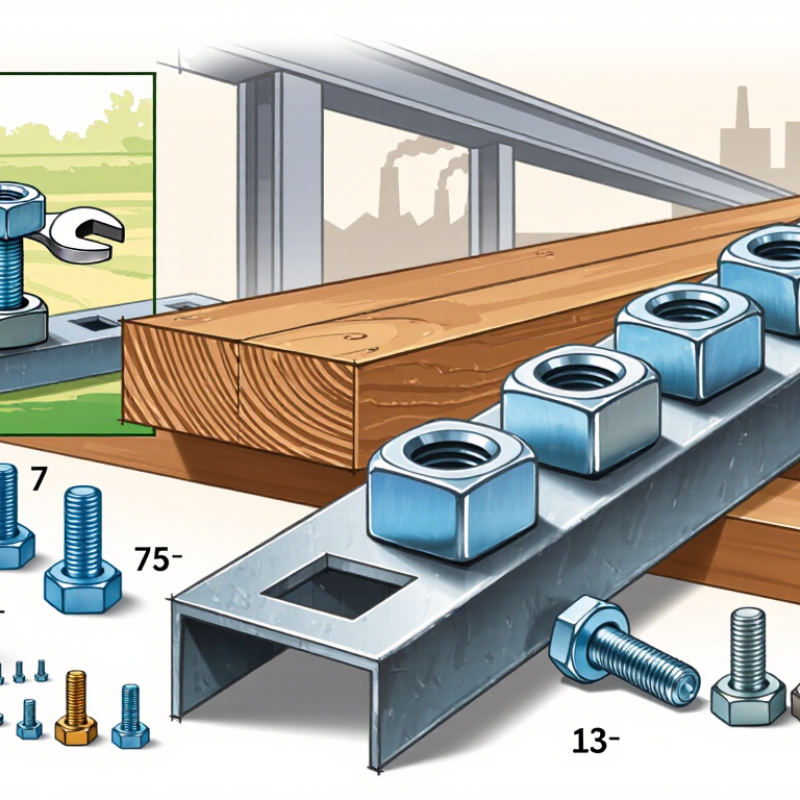
What Are Square Neck Bolts?
Square neck bolts are fasteners with a round head and a short square section beneath it. This square neck grips the material and helps prevent the bolt from turning during tightening. The nut can then be installed from the opposite side with one tool.
They are commonly used in timber joints, metal brackets, outdoor structures, and equipment frames. The round head leaves a smoother surface than a traditional hexagonal head. This matters where clothing, cables, or hands may catch on exposed hardware. During sourcing, check the bolt diameter, thread length, neck size, material, and surface finish. These details affect fit and service life.
A galvanized steel bolt may suit outdoor use, while stainless steel can support stronger corrosion resistance in demanding environments. However, material choice should match the load, moisture, temperature, and contact metals. Mixing incompatible metals can create problems over time. A square neck is not magic. Thin materials may not hold it securely, and oversized holes can let the bolt rotate. I have seen specifications focus on strength while ignoring the neck dimensions. That mistake can delay assembly. Thread standards and tolerances also vary between markets, so drawings and inspection samples should confirm the actual fit before larger orders. Pull-test records, coating checks, and batch traceability add useful reliability for global sourcing.
Why Choose Square Neck Bolts for Global Sourcing? - What Are Square Neck Bolts?
| Data Dimension | Verified Information | Global Sourcing Relevance |
|---|---|---|
| Product definition | A square neck bolt is a fastener with a rounded or domed head and a square section directly below the head. | The square section engages with the assembly material or a matching hole to help prevent the bolt from turning during tightening. |
| Common alternative name | Carriage bolt, coach bolt, or mushroom-head square-neck bolt. | The exact name can vary by market, so drawings and technical specifications should be used to avoid ordering errors. |
| Primary anti-rotation feature | A square shoulder beneath the head provides mechanical resistance to rotation. | One-sided tightening is possible in many applications, which can reduce installation time and simplify assembly access. |
| Typical applications | Timber construction, outdoor structures, fencing, agricultural equipment, sheet-metal assemblies, machinery guards, and general fabrication. | The product is suitable for applications where a smooth exposed head and simple installation are preferred. |
| Common thread systems | Metric coarse threads and inch-based UNC threads are widely used. The selected thread must match the nut or tapped hole. | Confirm thread diameter, pitch or threads per inch, thread tolerance, and nominal length before placing an international order. |
| Common metric diameters | M5, M6, M8, M10, M12, and M16 are commonly encountered sizes; availability depends on the applicable standard and supplier tooling. | Standardized sizes are generally easier to source, inspect, replace, and consolidate across multiple markets. |
| Length measurement | For most rounded-head carriage bolts, nominal length is measured from directly under the head to the threaded end. Confirm the applicable standard for exact measurement rules. | A clear measurement method prevents mismatches in grip length, thread engagement, and packaging specifications. |
| Common materials | Low-carbon steel, higher-strength carbon steel, and stainless steel are commonly specified according to application requirements. | Material selection should consider load, corrosion exposure, temperature, magnetic requirements, and compatibility with mating parts. |
| Typical strength designations | Metric fastener classes such as 4.6 and 8.8 may be specified for carbon-steel products; stainless fasteners may use designations such as A2-70 or A4-70 when the relevant standard applies. | Strength class must be stated on the purchase specification because appearance alone cannot verify tensile or proof strength. |
| Surface finishes | Common finishes include plain steel, zinc plating, hot-dip galvanizing, and stainless-steel passivation. | Finish requirements should reflect the service environment and should include coating thickness, corrosion testing, and any restricted-substance requirements where applicable. |
| Relevant standards | Common references include ASME B18.5 for round-head square-neck bolts, DIN 603 for mushroom-head square-neck bolts, and ISO standards where the specified product configuration is covered. | The standard should be named in the technical document because head dimensions, square-neck geometry, tolerances, and mechanical requirements can differ. |
| Dimensional information to request | Request nominal diameter, thread pitch, length, head diameter, head height, square-neck width and height, thread length, and dimensional tolerances. | A complete drawing or controlled specification improves quotation comparability between suppliers in different regions. |
| Installation requirement | The mating hole must allow the square neck to seat correctly without excessive clearance or interference. | Hole size and material thickness should be verified during sampling, especially for wood, thin sheet, and slotted components. |
| Corrosion considerations | Zinc-coated steel provides more corrosion resistance than plain carbon steel, while stainless steel is often selected for more demanding environments. | No coating is universally suitable; salt exposure, moisture, dissimilar-metal contact, and service life should guide the specification. |
| Quality-control checks | Key checks include material verification, dimensions, thread gauging, coating or finish inspection, hardness or tensile testing where required, and visual inspection. | Pre-shipment inspection and sample approval help control variation in mixed-size or recurring global orders. |
| Packaging and identification | Packaging should identify size, length, material, finish, standard, quantity, lot or batch information, and country-of-origin details when required. | Consistent labeling reduces receiving errors and supports traceability throughout international distribution. |
| Key sourcing advantage | Square neck bolts combine a simple anti-rotation design, broad size availability, and compatibility with common nuts and washers. | Their standardized form can support supplier comparison, multi-region purchasing, inventory planning, and replacement-part availability. |
Related Posts
-
Top Square Neck Bolt Innovations at the 139th Canton Fair?
-
2026 Best Square Neck Bolt Specifications and Buying Guide?
-
Understanding the Advantages of High Tensile Carriage Bolts for Structural Integrity in Modern Constructions
-
Exploring the Benefits of Using High Tensile Carriage Bolts for Your Construction Projects
-

How to Choose High Quality Carriage Bolts for Your Projects in 2025
-
How to Use Truss Head Carriage Bolt Effectively?