How to Choose the Right Stainless Bolts for Your Projects?
Choosing the right stainless bolts is crucial for the success of any project. In construction and manufacturing, the correct hardware can significantly influence durability and safety. According to a recent market analysis, the demand for stainless steel fasteners is projected to grow at a CAGR of 5.5% through 2025. This rise is driven by the increasing usage of stainless bolts in various industries, from automotive to marine applications.
Stainless bolts resist corrosion and wear, which extends the lifespan of structures. However, not all stainless bolts are created equal. Some offer lower tensile strength or inadequate resistance to harsh environments. It's essential to consider factors like material grade, coating, and intended use when selecting stainless bolts. Choosing incorrectly can lead to project delays and increased costs, underscoring the need for careful selection.
In the end, the decision comes down to a balance of cost, performance, and reliability. While many options exist, a hasty choice could jeopardize your project. Always prioritize quality and suitability over price. Reflecting on these aspects can lead to more informed decisions, ultimately ensuring successful outcomes.
Understanding Stainless Steel Bolt Grades and Their Applications
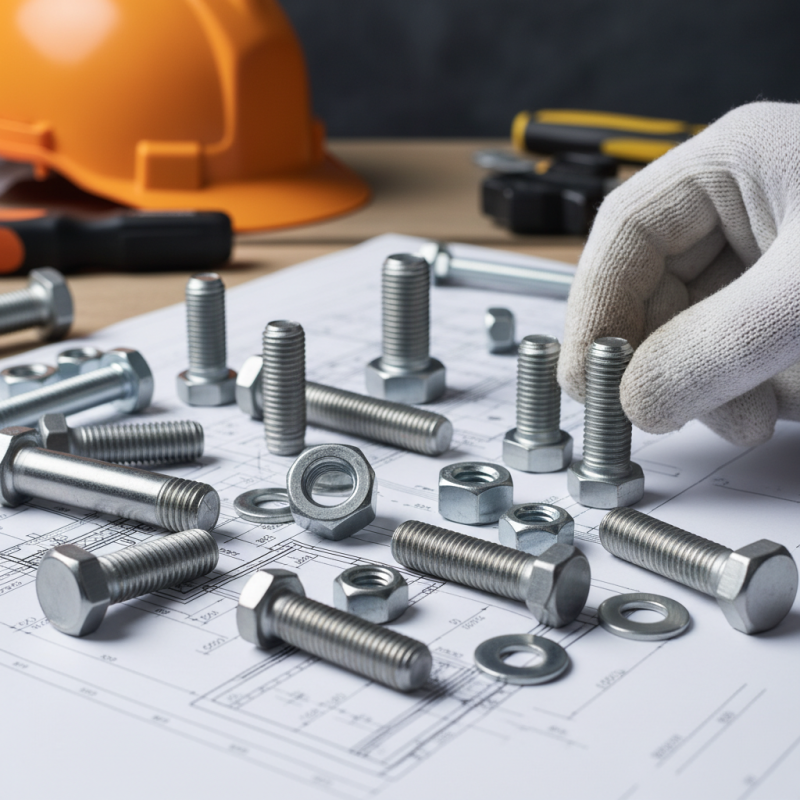
When selecting stainless steel bolts, understanding their grades is crucial. The most common grades include 304 and 316. Grade 304 is versatile and resists corrosion in many environments. It’s often used in kitchen equipment and architectural applications. However, it may not perform well in chloride-rich environments.
Grade 316, on the other hand, contains molybdenum, enhancing its resistance to corrosion, particularly in marine settings. This makes it suitable for boat fittings and chemical processing. A report from the Steel Construction Institute indicates that using the correct grade can significantly increase the lifespan of your projects.
**Tips:** Always consider the environment where the bolts will be used. Evaluate the potential for corrosion. Look for bolts that match your specific needs. While 304 may seem sufficient, it might fail in harsh conditions. Remember, choosing the wrong grade can lead to costly repairs. Aim for a balance between cost and performance.
Identifying Load Requirements for Your Specific Project Needs
When choosing stainless bolts for your project, understanding load requirements is crucial. Different applications demand various load capacities. For example, structural applications may require bolts that can handle tensile loads of over 140,000 psi per square inch. According to industry reports, using the correct bolt ensures safety and longevity.
Assessing your project's specific needs is vital. For instance, some projects may face dynamic loads or shock loads. These loads can exceed static loads and cause failure if improperly assessed. Engineers often use calculations based on factors like bolt diameter and grade to determine if a bolt is suitable. A study by the American Institute of Steel Construction highlights that up to 30% of failures occur due to inappropriate load evaluations.
Consider the environment where the bolts will be used. Exposure to moisture or chemicals can lead to corrosion, affecting the bolt's performance. Using marine-grade stainless steel may be necessary in harsh environments. However, it’s essential to remember that over-specifying bolts can lead to unnecessary costs. Balancing load requirements and budget constraints can be a complex process requiring reflection and adjustment.
How to Choose the Right Stainless Bolts for Your Projects? - Identifying Load Requirements for Your Specific Project Needs
| Diameter (mm) |
Length (mm) |
Load Capacity (kN) |
Material Grade |
Corrosion Resistance |
| 6 |
20 |
5.0 |
A2-70 |
Moderate |
| 8 |
30 |
8.0 |
A2-80 |
High |
| 10 |
40 |
12.0 |
A4-70 |
Very High |
| 12 |
50 |
15.0 |
A4-80 |
Extreme |
| 16 |
60 |
20.0 |
A4-100 |
High |
Evaluating Corrosion Resistance: Selecting the Right Coating Options
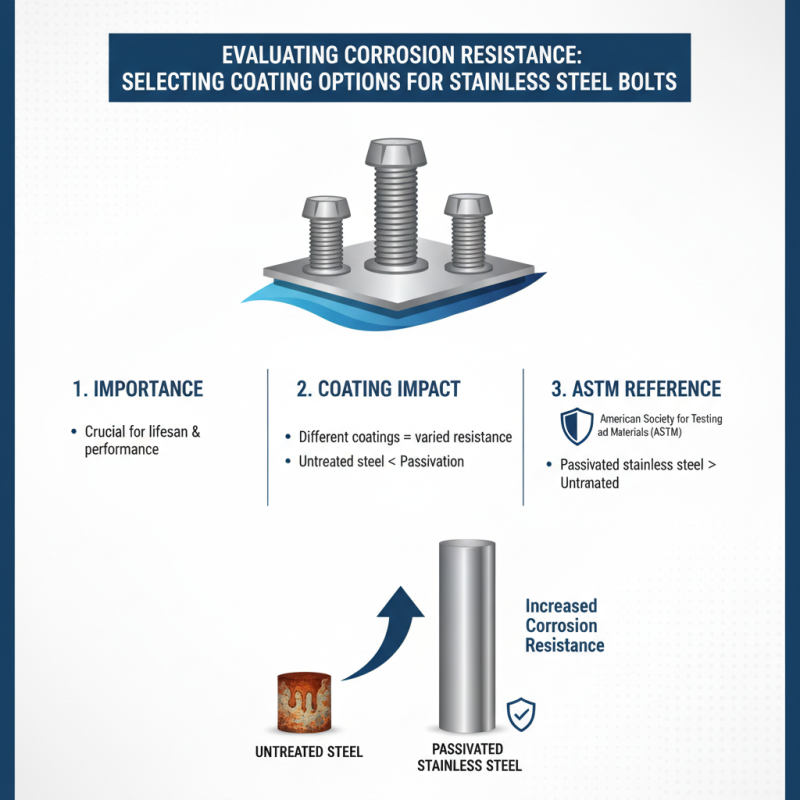
When selecting stainless bolts, evaluating corrosion resistance is crucial. Different coatings can significantly impact lifespan and performance. For instance, a report from the American Society for Testing and Materials (ASTM) highlights that stainless steel with passivation is more resistant to corrosion compared to untreated steel.
Tips: Consider the environment. Coastal areas often have saline conditions that can accelerate corrosion. Using bolts with additional coatings like zinc plating can enhance durability. However, not all coatings are created equal. Some may wear off quickly in harsh conditions.
Another aspect to consider is the specific application of your bolts. Industrial settings may require higher corrosion resistance. The slightly more expensive option of duplex stainless steel can double the resistance to pitting. A study from the Corrosion Engineering Society found that using the right coating can extend service life by up to 50%.
Tips: Always check the specifications. Some coatings may not be suitable for high temperatures. Understanding your needs prevents costly mistakes. Regular inspections are essential to maintaining the integrity of your bolts. Over time, coatings can degrade, which may lead to unexpected failures.
Sizing Your Bolts: Importance of Diameter and Length Specifications
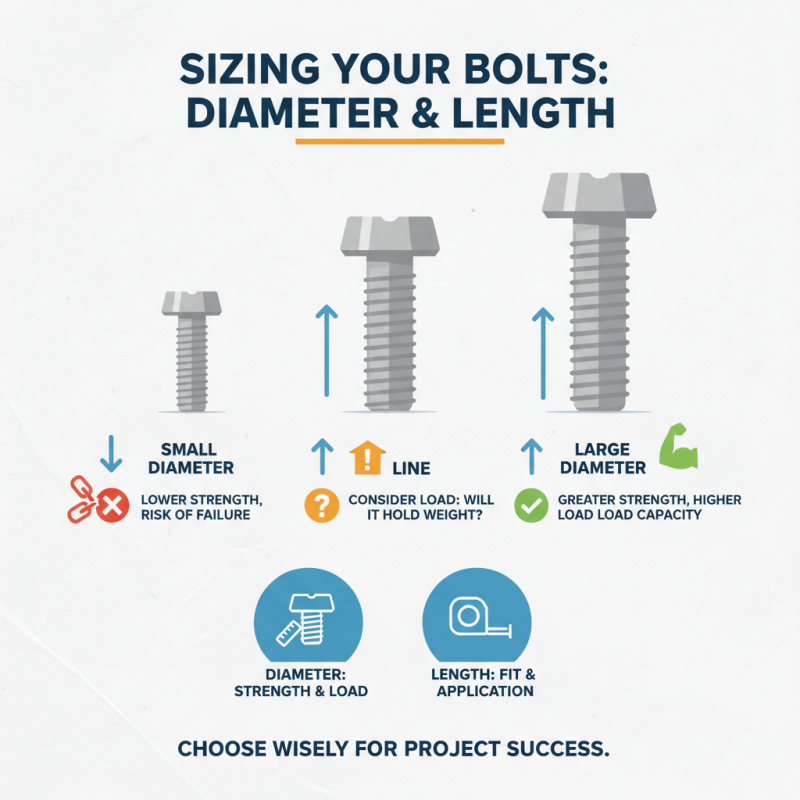
When selecting stainless bolts for your projects, understanding the importance of diameter and length specifications is vital. The diameter affects the strength and load capacity of the bolt. A larger diameter generally offers greater strength, but may not fit all applications. Think carefully about your needs. Will the bolt bear significant weight? A bolt that is too small can lead to failure.
Length is equally crucial. It determines how far the bolt will penetrate into the materials being fastened. A bolt that is too short may not secure the items effectively. Conversely, an overly long bolt can cause unnecessary protrusion, leading to safety risks. Visualize the assembly: if bolts are too long, they might interfere with other components.
Tips: Measure twice, choose once. Have the right tools to measure the diameter and length accurately. Consider using a test bolt to ensure proper fit. Don't forget about the material's characteristics. For example, softer materials require different bolt specifications compared to harder metals. Reflect on past projects where incorrect sizing led to issues. Learning from these experiences can guide your choices now.
Best Practices for Installation and Maintenance of Stainless Bolts
When it comes to the installation of stainless bolts, proper preparation is crucial.
Ensure all surfaces are clean and free from contaminants. Dirt and rust can compromise the bolt's integrity.
Use a wire brush or a cloth to clean the area well. This step often gets overlooked, but it is essential. Corrosion can occur even in stainless materials if not properly maintained.
During installation, apply the correct torque to each bolt.
Too much force can cause stripping, while too little can lead to loosening. It's a delicate balance.
Many people skip torque specifications entirely, leading to potential failures.
Periodically check the bolts after installation. Look for signs of wear or corrosion. Regular maintenance helps prevent unexpected issues.
Stainless bolts can still rust under certain conditions. Pay attention to environmental factors like humidity and salt exposure.
In coastal areas, additional protection may be necessary.
Don't assume stainless means maintenance-free. Regular inspections are needed to ensure longevity, as neglect can lead to premature failure.