Best Torx Screw Types for Your Global Sourcing Needs?
When sourcing components globally, selecting the right type of screw is crucial. Among various options, the Torx screw stands out for its unique design and performance. It features a star-shaped pattern, enabling superior torque application. This design minimizes the risk of stripping, which is a common issue with traditional screws.
Understanding different Torx screw types is essential for meeting diverse product requirements. Some projects may require standard Torx screws, while others might need variants with specific features, such as security or weatherproofing. The versatility of Torx screws makes them suitable for many applications, from electronics to automotive.
However, not all Torx screws are created equal. Sourcing the correct type requires careful consideration of material, size, and coating. Mistakes in the selection process can lead to functional failures. Companies should weigh their options rather than rush into decisions. Balancing cost and quality is vital for reliable sourcing.
Types of Torx Screws: Understanding the Variants and Their Applications
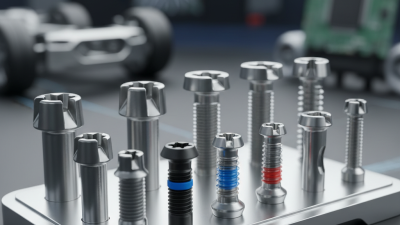
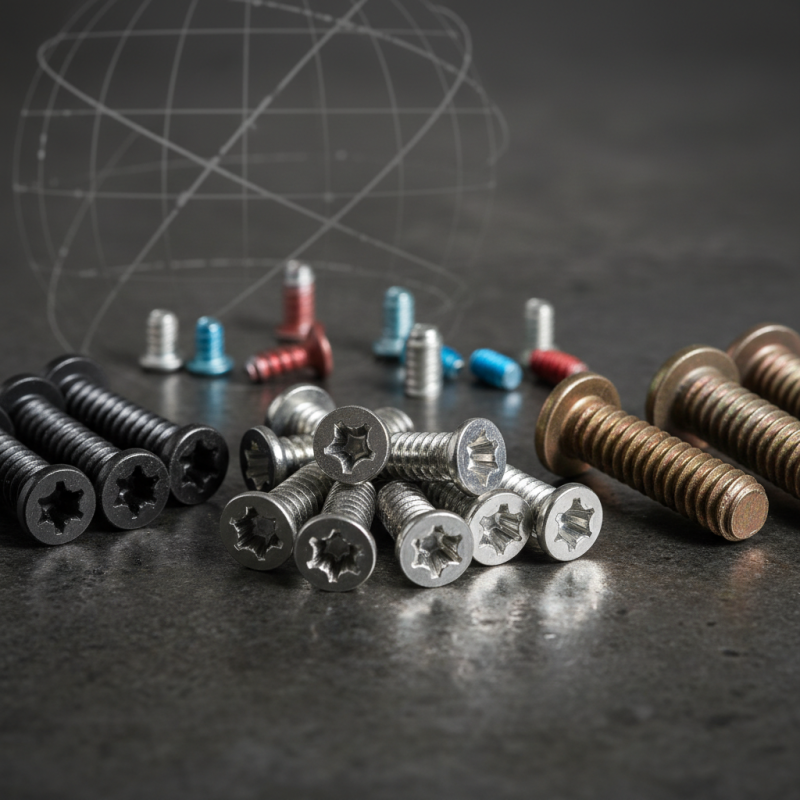
Torx screws, known for their star-shaped heads, come in various types suited for different applications. The most common types include standard Torx, security Torx, and tamper-resistant Torx screws. Each variant serves a specific purpose, particularly in industries like automotive, electronics, and construction. The choice of Torx screw can significantly impact the assembly and longevity of the products.
When selecting a Torx screw type, consider the project's requirements. Standard Torx screws are prevalent in many assembly tasks. They provide good torque transfer, reducing cam-out risks during installation. Security Torx screws require special tools, making them ideal for applications demanding higher security, such as in electronics enclosures.
Tips: Always match the screw size with the tool for optimal performance. Consider the material compatibility too. Tamper-resistant options can add an extra security layer to sensitive areas. Understanding these distinctions can enhance your sourcing decisions, leading to better project outcomes.
Best Torx Screw Types for Your Global Sourcing Needs
| Torx Screw Type |
Dimensions (mm) |
Drive Size |
Material |
Common Applications |
| Torx T10 |
3.5 x 10 |
T10 |
Steel |
Electronics, small appliances |
| Torx T15 |
4.0 x 12 |
T15 |
Stainless Steel |
Automotive, machinery |
| Torx T20 |
5.0 x 16 |
T20 |
Carbon Steel |
Furniture, construction |
| Torx T25 |
5.5 x 20 |
T25 |
Alloy Steel |
Bicycles, heavy equipment |
| Torx T30 |
6.0 x 25 |
T30 |
Chrome Vanadium |
Industrial, aerospace |
Choosing the Right Torx Screw Size for Your Project Requirements
When selecting Torx screws, understanding the size is crucial. Torx screws come in various sizes, each suited for different applications. The size impacts torque performance and ease of installation. A mismatch can lead to stripped heads or improper fastening.
For instance, smaller Torx sizes are typically used in electronics, where precision and control are paramount. In contrast, larger sizes are better for heavy machinery and automotive applications. Choosing the right size ensures that the screws function as intended and extends the life of the assembly.
It's also important to consider the material of the screw and the environment it will be used in. Corrosive environments require specific coatings. Sometimes, sourcing the perfect screw can be challenging. Testing different sizes and materials may be necessary to find the best fit for your project needs.
Benefits of Using Torx Screws in Global Sourcing Strategies
The use of Torx screws is becoming increasingly vital in global sourcing strategies. These screws offer superior torque transfer, which enhances fastening reliability. According to industry data, using Torx screws can reduce hardware failure rates by up to 30%. This is significant for manufacturers who prioritize quality and durability. A better grip means fewer stripped screws, leading to time savings in assembly and repairs.
Moreover, Torx screws facilitate better automation. They are especially compatible with robotic assembly lines, which are prevalent in modern manufacturing. A report from a leading engineering firm indicates that automated processes using Torx screws can improve assembly efficiency by 20%. However, some companies struggle with the initial adaptation of tooling and training for their workforce. This highlights the need for careful planning in sourcing decisions.
Sourcing Torx screws also opens doors to various industries. From automotive to electronics, their versatility is appealing. However, sourcing from multiple global suppliers can introduce variability in quality. Regular audits and quality checks are essential to mitigate risks. Building strong relationships with reputable suppliers can aid in maintaining consistency. Thus, while Torx screws can enhance sourcing strategies, continuous evaluation is necessary for success.
Benefits of Using Torx Screws in Global Sourcing Strategies
Comparative Analysis: Torx Screws vs. Other Screw Types in Global Markets
The global market for screws is expanding.
Torx screws are gaining popularity due to their unique design that prevents slippage during installation.
A recent industry report indicates that the demand for Torx screws has increased by approximately 15% over the last year.
This rise underscores the importance of understanding how they compare with other screw types.
In contrast, traditional Phillips screws often strip under high torque, making them less reliable.
In regions where precision is paramount, such as the automotive and electronics sectors, the ability of Torx screws to maintain grip has proven advantageous.
However, their availability may still lag in some global markets.
Not every supplier has access to the latest Torx screw technologies.
Moreover, the cost-effectiveness of Torx screws relative to alternatives remains a concern.
Some manufacturers hesitate to switch due to initial higher costs.
They question whether the long-term benefits justify this decision.
Balancing performance and affordability can be tricky for global sourcing specialists.
As industries evolve, the debate on screw type preference continues.
Understanding these dynamics will be crucial for strategic sourcing decisions.