Best 10 Nut And Bolt Options for Your Next Project?
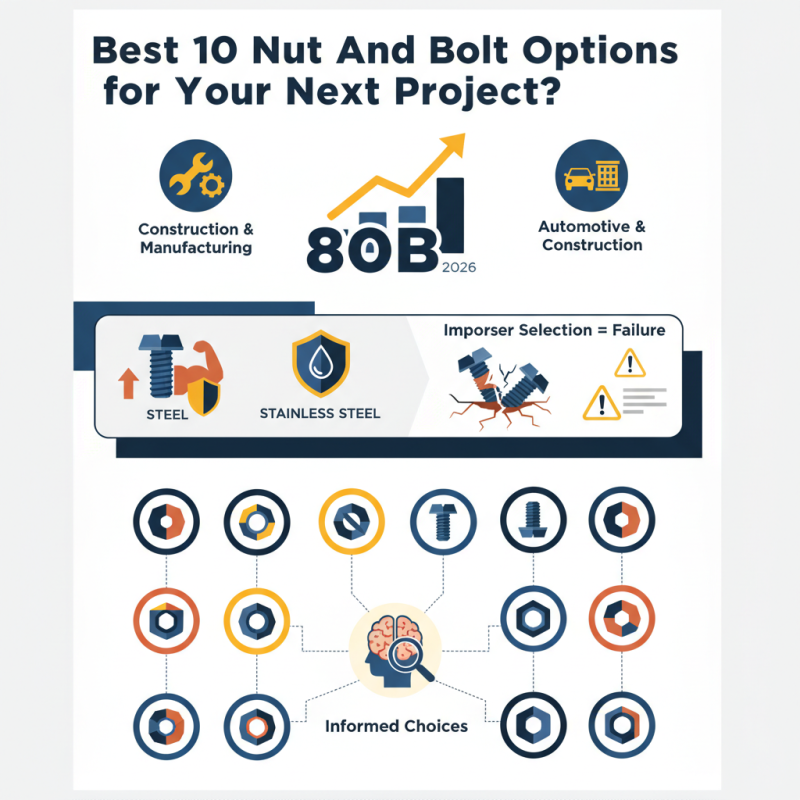
In the realm of construction and manufacturing, selecting the right hardware is crucial. The nut and bolt market is projected to grow substantially. According to a recent industry report, the market is expected to reach $80 billion by 2026. This growth is driven by increasing demand in sectors like automotive and construction.
Nut and bolt types vary significantly in size, material, and strength. Each project requires specific characteristics to ensure safety and longevity. For instance, steel bolts offer high tensile strength, while stainless steel provides corrosion resistance. Yet, many overlook essential aspects when choosing these components.
Improper selection can lead to catastrophic failures. This is particularly evident in high-load situations where the wrong nut and bolt can compromise structural integrity. Therefore, understanding the features and applications of each option is vital. Making informed choices ensures reliable performance and enhances project quality.
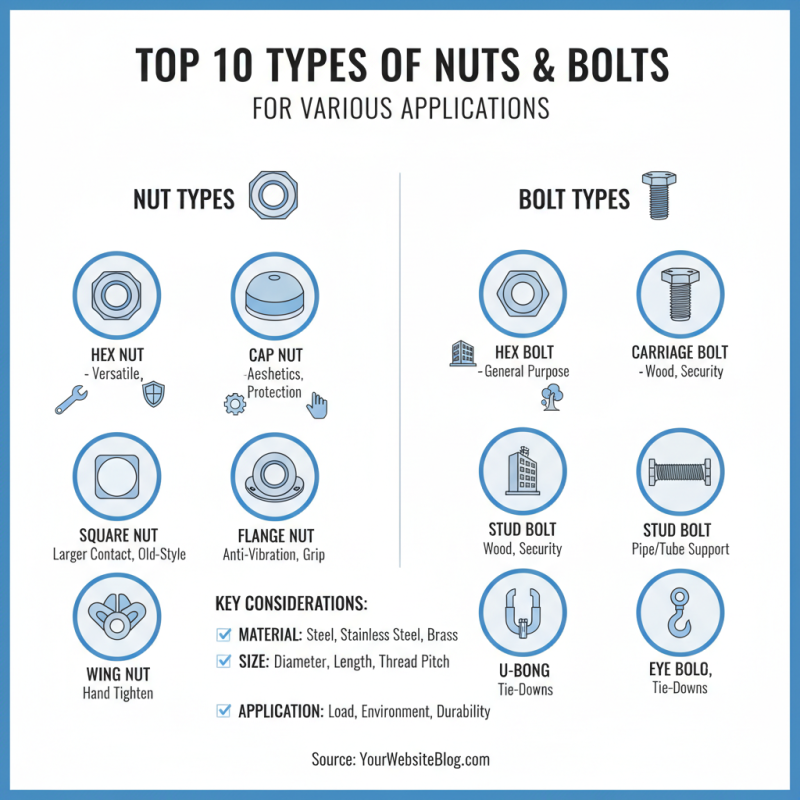
Top 10 Types of Nuts and Bolts for Various Applications
When selecting nuts and bolts for your projects, consider the various types available. Each type serves a unique purpose based on material, size, and application. For instance, hex nuts are widely used due to their versatility. They work well in many construction and automotive applications.
Bolts come in various grades, often correlated with strength. Grade 8 bolts are known for their high tensile strength. Meanwhile, stainless steel bolts offer excellent corrosion resistance, making them suitable for outdoor projects. According to industry reports, 60% of failures in mechanical assemblies can be traced back to improper fastener selection.
Tips: When choosing fasteners, assess the environment where they’ll be used. Stainless steel is ideal for humid conditions, while carbon steel is tougher for heavy loads.
Consider the ease of installation too. Some nuts and bolts are designed for quick assembly, saving valuable time on the job. However, remember that not all fasteners are created equal. Mismatching materials can lead to corrosion or weakening under stress. Always analyze project needs carefully to ensure the correct selections.
Factors to Consider When Choosing Nuts and Bolts
When selecting nuts and bolts for your project, several key factors come into play. Material choice is crucial. Steel, stainless steel, and brass all have different properties. Steel is strong but can rust. Stainless steel resists corrosion but might be more expensive. Consider the environment where components will operate. Harsh conditions might dictate a need for more resilient materials.
Another aspect to evaluate is the size and grip. Both length and diameter can affect the strength of a connection. If the bolt is too short, it won’t hold. Conversely, an overly long bolt can make assembly difficult. Always measure accurately.
Here are some tips to keep in mind:
- Ensure that threaded parts match in type and size. Mismatched threads can lead to failures.
- Examine the grade of the bolts. Higher grades are generally stronger but come at a cost.
- Don’t overlook lubrication. It can reduce friction and ensure a tighter fit.
Remember, making informed choices about nuts and bolts can prevent future headaches. The right combination enhances the integrity of your project and can save time and money down the line.
Best 10 Nut And Bolt Options for Your Next Project
Comparative Analysis of Material Types for Nuts and Bolts
When selecting nuts and bolts for a project, material choice critically impacts performance. Steel, the most common option, offers strength and durability. A report from the International Journal of Applied Engineering Research highlights that carbon steel fasteners have a tensile strength of up to 900 MPa. This makes them suitable for heavy machinery and structural applications. However, they can corrode, requiring protective coatings or galvanization.
In contrast, stainless steel is highly resistant to rust. It is ideal for outdoor and marine environments. Studies show that austenitic stainless steel grades can endure extreme temperatures without losing integrity. However, they are generally more expensive and may not provide sufficient strength for all applications. This trade-off between cost and performance is important to consider.
Plastic and nylon fasteners are useful for lightweight applications and can resist chemical exposure. However, their load-bearing capacity is significantly lower. Industry reports indicate that plastic fasteners can sustain loads of roughly 20% less than their metal counterparts. It is essential to match the material to the project's requirements. Evaluating the environment, load capacity, and potential for corrosion will influence the decision as much as the budget.
Best 10 Nut And Bolt Options for Your Next Project
| Material Type |
Strength (MPa) |
Corrosion Resistance |
Cost ($ per 100 units) |
Common Applications |
| Stainless Steel |
580 |
Excellent |
80 |
Marine, Automotive |
| Carbon Steel |
400 |
Good |
50 |
Construction, Machinery |
| Brass |
300 |
Moderate |
90 |
Electrical, Plumbing |
| Aluminum |
310 |
Good |
70 |
Aerospace, Automotive |
| Nylon |
80 |
Fair |
60 |
Insulation, Electronics |
| Bronze |
600 |
Good |
110 |
Marine, Musical Instruments |
| Titanium |
900 |
Excellent |
200 |
Aerospace, Medical |
| Zinc-Plated Steel |
350 |
Good |
40 |
General Hardware |
| Self-Locking Nylon |
100 |
Fair |
50 |
Electronics, Fixtures |
| High-Strength Alloy Steel |
900 |
Fair |
120 |
Machinery, Heavy Equipment |
Best Practices for Selecting the Right Size and Thread Type
When selecting the right size and thread type for nuts and bolts, understanding your project's needs is crucial. A common mistake is choosing a bolt without checking its diameter and length. Measure the thickness of the materials being fastened. This ensures a secure fit. An incorrect size can lead to weakened joints.
Thread types are equally important. Coarse threads provide better grip in soft materials. Fine threads are suitable for harder materials, offering better tension control. Always consider the environment too. For instance, corrosive conditions demand specific materials to prevent rust and deterioration.
Don't overlook any details. Many overlook the importance of these choices, resulting in project delays and increased costs. Take the time to research and make informed decisions. Your project's success depends on these fundamental aspects.