Best Countersunk Head Bolt Types and Their Applications?
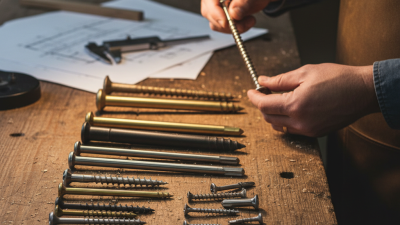
Countersunk head bolts are essential fasteners in various industries, known for their unique design. They provide a flush finish when installed, making them ideal for applications where surface smoothness is critical. According to the Industrial Fasteners Institute, countersunk bolts account for approximately 25% of the global fastener market, reflecting their importance.
Their applications span from aerospace to automotive. In aerospace, for instance, a seamless finish reduces drag and improves aerodynamics. In automotive manufacturing, these bolts prevent snagging and enhance safety. However, using incorrectly sized countersunk head bolts can lead to issues. Reports show that improper torque settings and misalignments can cause bolt failure, which has serious implications for structural integrity.
Understanding the various types of countersunk head bolts is vital for engineers and manufacturers. Each type serves a specific function, but choosing the right one requires careful consideration. As industries evolve, the demand for precision fasteners like countersunk head bolts continues to grow. The challenge lies in balancing performance and cost-effectiveness while ensuring safety and reliability.
Types of Countersunk Head Bolts and Their Characteristics
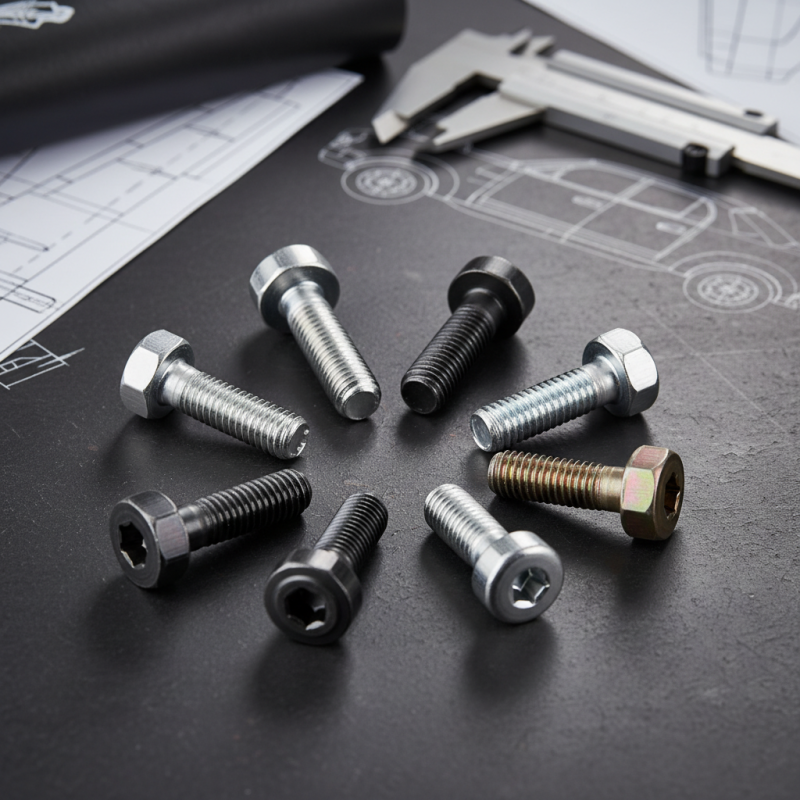
Countersunk head bolts are essential in various applications. Their design allows for a flush finish, making them ideal for aesthetic purposes. Commonly used in furniture, automotive, and aerospace industries, these bolts prevent protrusions that could cause snagging or injuries. According to a recent industry report, around 25% of mechanical failures are linked to improper fastener selection, including the use of inadequate countersunk bolts.
Different types of countersunk head bolts exist, each tailored for specific needs. Flat head bolts, for instance, provide a wide bearing surface, which enhances load distribution. On the other hand, oval head bolts feature a slightly rounded top, offering a more refined finish. Materials like stainless steel are popular due to their corrosion resistance, while carbon steel is favored for its strength. However, using the wrong material can lead to premature failure, as seen in 15% of structural failures in building reports.
It’s crucial to pay attention to the head design and drive type. Phillips drives help prevent slippage during installation but may strip under high torque. In contrast, Torx drives provide better torque transfer but can be harder to source. Each choice has trade-offs and can impact project outcomes significantly, as highlighted by recent surveys indicating that 30% of professionals faced challenges due to fastener selection.
Common Materials Used for Countersunk Head Bolts
Countersunk head bolts are essential components in various engineering and construction applications. The choice of material is crucial for performance and longevity. Common materials for these bolts include steel, stainless steel, and aluminum. Steel bolts are strong and versatile, often used in structural applications. Stainless steel offers excellent corrosion resistance, making it ideal for outdoor or marine environments.
Aluminum countersunk bolts are lightweight and resist oxidation. They are commonly used in aerospace applications where weight is a concern. According to industry reports, around 30% of fastening failures are due to improper material selection. Thus, ensuring the right material is pivotal to the project’s success.
Tips: Always consider the environment when selecting materials for countersunk bolts. Exposure to chemicals or moisture can impact longevity. A detailed study of the project requirements can save costs in the long run. Remember, not all materials suit every application. It's essential to understand these nuances for better performance.
Best Countersunk Head Bolt Types and Their Applications
Applications of Countersunk Head Bolts in Various Industries
Countersunk head bolts are essential components in various industries. These bolts are designed to sit flush with the surface they are installed in. This flush finish provides a cleaner look and minimizes the risk of snagging or injury. In the aerospace sector, the aerospace fastener market was valued at approximately $6.53 billion in 2022. Countersunk bolts play a vital role in securing aircraft components. They ensure aerodynamics and safety through streamlined designs.
In the construction industry, countersunk head bolts are often used in structural applications. Reports indicate that the global construction market is projected to reach $15 trillion by 2030. Builders favor these bolts for their ability to improve stability without compromising aesthetics. They are also found in furniture design, helping create sleek lines in modern pieces. However, the variability in materials can affect performance. Some steel bolts may corrode faster than expected, requiring regular checks.
Manufacturing applications also rely on these bolts. Precision engineering uses countersunk bolts for their accuracy in assembly. The automotive industry is a key user, with about 70 million cars produced annually. These bolts ensure that vehicle parts are securely fastened. Misalignment during installation can lead to failures, highlighting the need for training and quality control. Regular testing practices are essential to maintain safety and efficiency.
Benefits of Using Countersunk Head Bolts in Assembly Design
Countersunk head bolts offer several benefits that enhance assembly design. Their design allows the bolt head to sit flush with the surface. This feature prevents snagging and provides a smooth finish. In applications where aesthetics matter, this is crucial. Furthermore, it reduces potential hazards in crowded settings.
Using countermade head bolts aids in load distribution. The shape of the head can help channel stress more effectively. This reduces the risk of stripping threads or damage to the materials being fastened. However, the installation process requires precision. Misalignment can lead to inadequate fastening and structural issues. Regular checks on the install quality are vital.
Another aspect to consider is corrosion resistance. While many materials resist rust, not all bolts are created equal. Some may corrode faster when not properly coated. It's essential to evaluate the environment where they will be used. Ongoing maintenance can ensure longevity and performance, but it can be overlooked. An assembly design that factors in these details is more robust and reliable.
Best Countersunk Head Bolt Types and Their Applications
| Bolt Type |
Material |
Strength Grade |
Typical Application |
Benefits |
| Socket Countersunk Head Bolt |
Steel |
8.8 |
Machinery Assembly |
Flush finish and easy installation |
| Flat Countersunk Head Bolt |
Stainless Steel |
A2-70 |
Furniture and Fixtures |
Corrosion resistance and aesthetic appeal |
| Tapered Countersunk Head Bolt |
Carbon Steel |
10.9 |
Heavy Equipment |
High strength and load-bearing capacity |
| Countersunk Head Machine Screw |
Brass |
N/A |
Electronics Assembly |
Non-magnetic and good conductance |
Installation Techniques for Countersunk Head Bolts and Best Practices
When installing countersunk head bolts, precision is key.
Make sure to choose the correct drill bit size. A hole that is too large can weaken the grip. Start with a pilot hole to guide your drill. This step often gets overlooked, leading to misalignment. Use a depth gauge to avoid drilling too deep. Inaccurate depth can compromise the joint integrity.
Applying the right torque is essential. Too much torque can strip the threads. Too little can lead to loosening over time. Utilize a torque wrench for accurate measurements. Pay attention to the material you are fastening. Different materials require different techniques. Always check for any gaps after installation. Adjust as necessary to ensure a snug fit.
Take time to inspect your work. Over-tightening can cause surface damage. It’s easy to miss signs of stress. Always revisit your bolts after a period of use. This helps catch any issues early. Learning from past mistakes is part of improvement. Regular inspections ensure the long-term success of your installation.